
I compared trench drains and French drains through real installations and long-term performance observations.
The main intent of this article is to show you the practical differences in surface water control subsurface drainage installation effort and maintenance so you can choose the better system for your property.
You will see clear pros cons and side-by-side results that reflect actual use rather than theoretical claims.
| Feature | Trench Drain | French Drain |
| Primary Function | Captures surface water quickly | Moves subsurface and groundwater |
| Visibility | Grate remains visible at surface | Fully buried and invisible |
| Installation Depth | Shallow | Deeper trench required |
| Best Location | Driveways patios walkways pool decks | Lawns foundations wet yards |
| Maintenance Access | Easy through grate | More difficult once buried |
| Clogging Risk | Debris on grate and channel | Silt and roots in pipe and gravel |
| Cost Range | Moderate for linear runs | Higher due to excavation and materials |
| Appearance | Functional industrial look | Invisible after landscaping |
| Water Type Handled | Surface runoff | Groundwater and saturated soil |
My Experience Testing Both Drainage Systems Side by Side
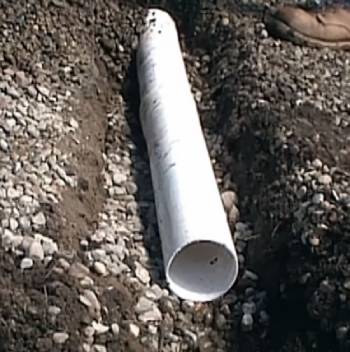
I installed and monitored both trench drains and French drains on properties that suffered from standing water driveway flooding and foundation moisture over multiple seasons.
The trench drain sat at the surface and intercepted water the moment it began to flow across hard surfaces.
Heavy rain sent sheets of water into the grate and the channel carried it away before it could pool against the garage or patio doors.
I cleaned the grate every few months and occasionally flushed the channel to keep flow strong.
The French drain operated completely out of sight after installation.
It collected water that had already soaked into the soil and moved it away from the foundation and low spots in the yard.
After the trench was backfilled and the lawn restored the wet areas gradually dried and the basement stayed noticeably drier.
Both systems solved different problems effectively when placed in the correct locations.
The trench drain excelled at stopping surface runoff on driveways and walkways.
The French drain performed better against slow saturation and groundwater near the house.
I watched both systems through intense storms and quiet wet periods and recorded how each responded.
Key factors such as water source soil type available depth outlet location and long-term maintenance shaped the practical results.
My years of observing both systems after storms and through seasonal changes supplied the detailed observations that follow.
Surface Water Control and Immediate Performance
Surface water control and immediate performance favor the trench drain in most hardscape situations.
When rain falls on a driveway patio or walkway the water stays on the surface until it reaches a collection point.
A trench drain placed across the flow path intercepts that water quickly and moves it into a pipe or away from the area.
I watched heavy storms send water racing toward garage doors only to disappear into a properly placed trench drain within minutes.
French drains sit below the surface and cannot catch water that has not yet entered the soil.
In storms that produce heavy sheet flow the trench drain shows results almost immediately.
Properties with sloping driveways or large patio areas gain the most from this rapid surface interception.
The ability to stop water before it reaches the house or pools in living spaces is the strongest practical advantage of the trench drain.
Subsurface Drainage and Foundation Protection
Subsurface drainage and foundation protection favor the French drain.
Water that soaks into the ground and moves laterally toward a basement or crawl space is the primary target of a French drain.
The perforated pipe surrounded by clean gravel collects that water and carries it to a safe discharge point.
A trench drain at the surface does little once the water has already entered the soil.
Homes with damp basements musty crawl spaces or chronically wet yards near the foundation usually need the subsurface approach.
I observed foundation walls stay drier and interior humidity drop after a correctly installed French drain began working.
The system operates continuously rather than only during active rainfall which makes it effective against persistent groundwater.
Installation Effort Depth and Site Disruption
Installation effort depth and site disruption differ significantly between the two systems.
Trench drains require only a shallow excavation just deep enough for the channel body and a continuous slight slope toward the outlet.
Most installations can be completed with minimal disturbance to surrounding areas.
French drains need a deeper trench often two feet or more depending on the water table and desired pipe depth.
The deeper dig creates far more soil to move and more disruption to existing landscaping.
Properties with limited access mature plantings or tight side yards may prefer the shallower trench drain option when surface water is the main problem.
The physical effort and restoration time are noticeably greater with a French drain.
Maintenance Access Clogging and Long-Term Care
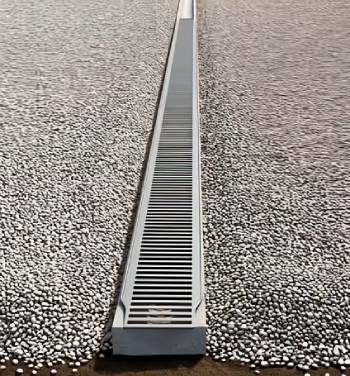
Maintenance access clogging and long-term care reveal clear practical differences.
Trench drain grates can be lifted or cleaned from the surface.
Leaves dirt mulch and debris are easy to see and remove with basic tools.
Occasional flushing of the channel keeps sediment from building up.
French drains hide the pipe and gravel under soil and sod.
When silt or roots eventually restrict flow the repair usually requires excavation to reach the problem section.
Filter fabric and proper gravel selection reduce but do not eliminate long-term clogging risk on French drains.
Owners who prefer simple ongoing maintenance often favor the accessible trench drain.
Cost Materials and Project Scope
Cost materials and project scope vary with length depth and complexity.
A short trench drain run across a driveway or patio is often less expensive than a long French drain along a full foundation.
French drains consume more gravel perforated pipe filter fabric and backfill and require greater labor for excavation.
Both systems need a reliable outlet that can accept the water without causing problems elsewhere.
The total cost depends heavily on how many linear feet are required soil conditions and how difficult the digging and restoration will be.
Budget planning should include both the drainage materials and the landscape restoration that follows.
Best Locations and Ideal Use Cases
Best locations and ideal use cases separate the two systems cleanly.
Trench drains belong at the low edge of driveways across patio perimeters in front of garage doors and along pool decks.
French drains belong along foundations in low spots of the yard and in areas where the soil stays saturated for days after rain.
Using the wrong system for the actual water source leads to disappointing results and wasted effort.
Matching the drain type to the problem produces the most reliable long-term outcome.
Appearance Landscaping and Property Impact
Appearance landscaping and property impact favor the French drain for most finished yards.
Once backfilled and reseeded or re-sodded the French drain disappears completely.
Trench drains leave a visible grate line that some owners accept as a functional element and others prefer to avoid.
In formal landscapes or front yards the invisible system is usually preferred.
In utility areas and along driveways the visible grate is often considered acceptable.
Durability Load Capacity and Expected Lifespan
Durability load capacity and expected lifespan depend on material quality and installation care.
Trench drains with proper load-rated grates handle pedestrian or vehicle traffic for many years when installed on a stable base.
French drains last longest when the pipe is correctly sloped wrapped with quality filter fabric and surrounded by clean gravel.
Both systems can serve for decades when given a clear outlet and reasonable maintenance.
Poor installation shortens the life of either system regardless of material quality.
Combining Both Systems for Complete Control
Combining both systems for complete control is often the most effective long-term strategy on challenging properties.
A trench drain can catch surface water before it reaches the house while a French drain protects the foundation from subsurface moisture.
I have seen properties use a trench drain across the driveway and a French drain along the foundation with excellent overall results.
Many lots benefit from using each system where it performs best rather than forcing one system to solve every water problem.
Soil Type Slope and Climate Considerations
Soil type slope and climate considerations influence which system performs better.
Heavy clay soils that drain slowly often need French drains to relieve saturation.
Sandy soils may move water downward more readily yet still benefit from surface interception on hardscape.
Steep slopes can generate fast surface runoff that favors trench drains.
Flat lots with high water tables usually need subsurface relief.
Local rainfall patterns and freeze-thaw cycles also affect long-term durability and maintenance needs.
Also Read: My Experience With Wild Tornado Sink And Drain Cleaner
Outlet Options and Discharge Planning
Outlet options and discharge planning are critical for both systems.
Water must go somewhere and the discharge point must be lower than the drain and directed away from neighboring properties.
Daylight outlets into a swale or ditch work well when available.
Connections to storm systems or dry wells are other common solutions.
A poorly planned outlet can cause the entire system to back up regardless of how well the trench or pipe was installed.
Common Installation Mistakes and How to Avoid Them
Common installation mistakes and how to avoid them apply to both systems.
Insufficient slope is one of the most frequent problems.
Skipping filter fabric on a French drain allows silt to clog the gravel and pipe.
Using a light-duty grate on a trench drain in a vehicle path leads to early failure.
Failing to secure a clear outlet causes backups.
Careful planning and attention to these details improve the success rate of either system.
Pros and Cons Of Trench Drains
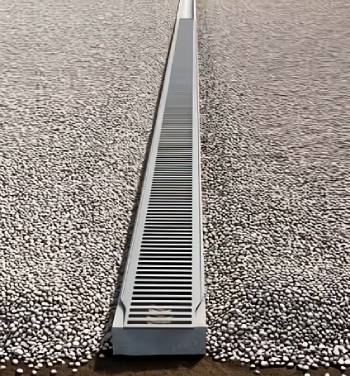
Pros Of Trench Drains
- Rapid Surface Water Capture: Intercepts runoff the moment it reaches the grate.
- Shallow Installation: Requires less digging than most subsurface systems.
- Easy Visual Inspection: Grate and channel remain accessible for cleaning.
- Effective on Hard Surfaces: Works well across driveways patios and walkways.
- Modular Design: Sections can be linked to create long continuous runs.
- Quick Water Removal: Moves large volumes of water during heavy rain.
- Simple Maintenance Access: Debris can be removed without excavation.
- Versatile Placement: Can be installed at the edge of slabs or across slopes.
- Durable Grates Available: Options exist for pedestrian or vehicle traffic.
- Immediate Results: Standing water on the surface disappears once connected.
The Analytical Cons Of Trench Drains
- Visible Grate: Remains part of the landscape appearance.
- Surface Debris Collection: Leaves twigs dirt and leaves that need periodic removal.
- Limited Subsurface Reach: Does little for water already in the soil.
- Potential Trip Hazard: Grate edges require careful installation and attention.
- Channel Clogging Risk: Sediment can build up inside the channel over time.
- Aesthetic Limitations: Industrial look may not suit every landscape style.
- Requires Proper Slope: Must be graded correctly to move water to the outlet.
- Not Ideal for Lawns: Surface grate interrupts continuous turf areas.
- Load Rating Matters: Light-duty grates can fail under vehicle weight.
- Outlet Dependency: Performance depends on a clear discharge point.
Pros and Cons Of French Drains
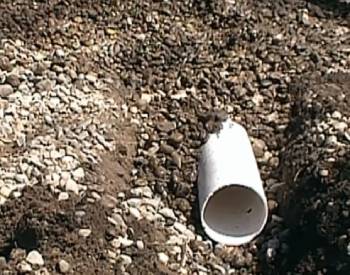
Pros Of French Drains
- Invisible After Installation: Disappears under soil and landscaping.
- Effective Against Groundwater: Lowers the water table in saturated areas.
- Protects Foundations: Reduces moisture pressure against basement walls.
- Handles Slow Saturation: Works continuously on water moving through soil.
- Preserves Lawn Appearance: No visible hardware once complete.
- Long Linear Coverage: Can run along entire foundation or wet zones.
- Reduces Standing Water in Yards: Helps dry chronically soggy areas.
- Compatible with Landscaping: Plants and turf can grow over the trench.
- Proven Traditional Method: Long history of successful use.
- Flexible Layout: Can follow contours and direct water to safe outlets.
The Analytical Cons Of French Drains
- Deep Excavation Required: More labor and disruption during installation.
- Higher Material Cost: Pipe gravel fabric and backfill add expense.
- Difficult Maintenance Access: Problems often require digging to reach the pipe.
- Clogging from Silt and Roots: Fine particles and plant roots can block flow over time.
- Slower Visible Results: Works on subsurface water rather than instant surface removal.
- Installation Skill Matters: Poor fabric wrapping or slope leads to early failure.
- Not for Sheet Flow: Surface water may still pond if no surface inlet exists.
- Settlement Risk: Improper backfill can cause later dips in the lawn.
- Outlet Must Be Reliable: System fails if the discharge point is blocked or too high.
- Disruption During Install: Yard or landscaping is disturbed until restoration.
Also Read: My Experience With WingTite Shower Drain
Frequently Asked Questions (FAQs)
Most exterior trench drains that discharge to daylight or a storm system do not require a p-trap. Interior or sanitary connections follow local plumbing codes.
Avoid a French drain when the primary problem is surface sheet flow on hardscape or when the outlet cannot be placed lower than the pipe.
Yes. Leaves dirt and sediment collect on the grate and inside the channel and require periodic cleaning.
The best system depends on whether the water is on the surface or in the soil. Many backyards need a French drain for saturation and may add surface inlets for low spots.
Final Thoughts
I compared trench drains and French drains and found two systems that solve different water problems.
The main intent remains giving you clear side-by-side observations on surface control subsurface drainage and long-term care so you can select the right approach.
Trench drains excel at intercepting surface runoff while French drains protect against groundwater and soil saturation.
You now have the detailed experience to match the system to the specific water issue on your property.
Recent Posts
I compared American Standard and Kohler toilets through real owner feedback and practical daily use observations.The main intent of this article is to show you the differences in flush...
I compared the Kohler Highline and Kohler Cimarron toilets through real owner feedback and practical observations.The main intent of this article is to show you the differences in flush...