
If your Symmons shower valve won’t shut off completely, the most likely cause is not the handle—it’s usually the TA-10 spindle, worn spindle washers, or damaged valve seats.
The good news is that Symmons Temptrol valves are designed to be serviceable. In many cases, you can stop the drip without replacing the entire valve body.
Why A Symmons Shower Valve Won’t Shut Off
The most common causes are:
- Worn hot or cold spindle washers
- Damaged valve seats
- Debris inside the spindle
- Mineral buildup
- Worn packing components
- Loose or damaged handle
- Incorrect spindle adjustment
- Corrosion inside the valve
- A damaged TA-10 spindle
- A valve body that needs professional service
If water continues flowing even when the handle reaches the OFF position, start with the spindle and sealing surfaces.
Symmons Temptrol Valve: How It Works
Many Symmons shower systems use the Temptrol pressure-balancing valve.
At the center of the valve is the TA-10 control spindle.
This one component performs several jobs:
- Turns water on and off
- Mixes hot and cold water
- Helps maintain balanced pressure
- Regulates temperature as the handle turns
The TA-10 has been used in Temptrol valves for decades, which is one reason replacement parts remain widely available.
Unlike many modern shower valves that use a removable plastic cartridge, the Temptrol uses a serviceable brass spindle with replaceable washers and matching hot and cold seats.
1. Worn Spindle Washers

If the shower shuts down almost completely but continues to drip or trickle, worn washers are the first thing to suspect.
The TA-10 spindle uses separate washers to seal against the hot and cold seats inside the valve body.
Over time, these washers can:
- Harden
- Flatten
- Crack
- Tear
- Become distorted
When the handle is turned off, damaged washers can no longer seal tightly against the seats.
Water then continues passing through the valve.
Typical Symptoms
- Showerhead drips continuously
- Tub spout drips after the valve is shut off
- Dripping gradually becomes worse
- Handle appears to reach the normal OFF position
The Symmons TA-9 washer repair kit is designed specifically for this repair.
It typically includes:
- Hot washer
- Cold washer
- Cold washer retainer
- Hot washer screw
- Cap gasket
If the spindle itself is still in good condition, replacing the washers may restore a proper shutoff without replacing the entire TA-10.
Also Read: Is Kohler Tellin Shower Head Worth It?
2. Damaged Hot and Cold Seats
New washers will not solve every leak.
Inside the valve body are two metal sealing surfaces known as the hot and cold seats.
These are commonly serviced using the TA-4 seat kit.
If the seats become:
- Pitted
- Scratched
- Worn
- Corroded
new washers may still be unable to form a watertight seal.
This is especially likely when:
- You already replaced the TA-9 washers.
- The valve still drips.
- The old washers were severely damaged.
- The valve is decades old.
Both hot and cold seats should normally be replaced together rather than changing only one.
They require the correct Symmons seat-removal tool.
3. TA-10 Spindle Is Worn or Damaged
Sometimes replacing the individual washers is not enough because the complete spindle has deteriorated.
The TA-10 spindle is the main operating component in many Temptrol valves.
A damaged spindle can cause:
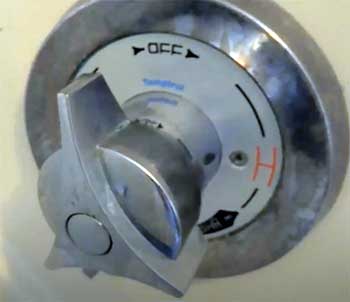
- Valve that will not shut off
- Difficult handle movement
- Only hot water
- Only cold water
- Inconsistent temperature
- Weak water flow
- Constant dripping
If the spindle has significant corrosion, stripped threads, damaged sealing areas, or a seized pressure-balancing mechanism, replacing the complete TA-10 may be the better repair.
Because the TA-10 includes the spindle sealing components, replacing it also eliminates several possible sources of failure at once.
4. Mineral Buildup Inside the Spindle
Hard water can interfere with the pressure-balancing mechanism inside a Temptrol spindle.
The TA-10 contains an internal pressure-balancing shuttle that should move freely.
When you remove and shake a healthy TA-10, you should normally be able to hear or feel the internal shuttle moving.
Mineral deposits can cause it to stick.
This more commonly produces symptoms such as:
- Only hot water
- Only cold water
- Poor temperature control
- Reduced flow
But severe mineral buildup can also contribute to poor valve operation.
Cleaning the Spindle
If the TA-10 is otherwise undamaged, mineral deposits can sometimes be loosened by soaking the spindle in white vinegar.
After cleaning, the internal balancing shuttle should move freely again.
If it remains stuck, replacing the spindle is usually the better option.
Also Read: Reasons For Symmons Shower Valve Low Water Pressure.
5. Dirt or Debris Inside the Valve
Plumbing debris can enter a shower valve after:
- Water-main work
- Pipe replacement
- New construction
- Water-heater replacement
- Shutoff valve work
- Older galvanized-pipe deterioration
Small particles of:
- Solder
- Scale
- Rust
- Sand
- Pipe debris
can interfere with the spindle or seats.
If debris gets trapped between a washer and seat, the valve may continue to drip even though neither part is badly worn.
Cleaning the valve body and sealing surfaces before installing new parts can prevent the new washers from leaking immediately.
6. Handle Reaches the Stop Before the Valve Fully Closes
Sometimes the problem appears to be inside the valve but actually involves the handle or spindle connection.
If the handle is:
- Loose
- Stripped
- Incorrectly installed
- Binding against trim
- Not fully engaging the spindle
it may stop turning before the spindle reaches the true shutoff position.
Remove the handle and inspect:
- Handle splines
- Screw
- Stem engagement
- Escutcheon interference
If the bare spindle can be turned to a complete shutoff position but the handle cannot, the handle or trim assembly is the likely problem.
7. Valve Is Difficult to Turn
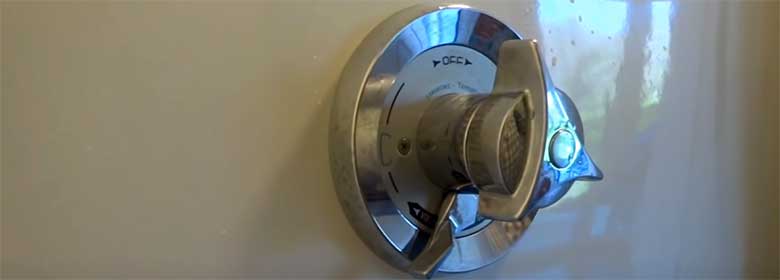
A Temptrol valve should offer some resistance, but it should not require excessive force.
A stiff handle can result from:
- Mineral deposits
- Worn spindle
- Packing that is too tight
- Corrosion
- Damaged cap components
The spindle passes through the T-12A cap assembly, which contains sealing and packing components.
Parts in the cap help prevent water leakage around the spindle while also affecting how tightly the spindle turns.
If the packing is excessively tight, the handle can become difficult to operate.
If the packing is too loose or worn, water may leak around the stem.
8. Water Leaks From Behind the Handle
Water leaking from the showerhead when off and water leaking from behind the handle are different problems.
A leak around the spindle near the handle can involve:
- Packing washer
- O-ring
- Cap washers
- Packing nut
Symmons uses the T-16 washer repair kit for several of these sealing components.
If water appears behind the trim plate or around the spindle while the shower is running, inspect the cap assembly rather than focusing only on the TA-9 shutoff washers.
Ignoring this type of leak can allow water to enter the wall cavity.
Also Read: Problems With Santec Shower Valve.
9. Valve Will Not Fully Shut After Replacing the Spindle
If you just installed a new TA-10 and the valve still leaks, don’t automatically assume the new spindle is defective.
Check the TA-4 seats.
A new spindle with new washers cannot seal correctly against badly damaged metal seats.
Other possibilities include:
- Debris on the seat
- Incorrect assembly
- Damaged cap gasket
- Incorrect spindle installation
The spindle and seats work as a sealing system.
Replacing only one half of a severely worn system may not solve the leak.
10. Valve Was Reassembled in the Wrong Position
Symmons Temptrol valves require attention to spindle position during disassembly and reassembly.
The manufacturer specifically instructs technicians to open the valve to approximately the normal shower position before removing the cap assembly.
Trying to remove or reinstall certain parts with the spindle fully closed can damage components or make servicing unnecessarily difficult.
If the valve behaves strangely immediately after a repair, check the reassembly procedure carefully.
What Parts Usually Fix a Symmons Temptrol Leak?
Three parts are particularly important.
TA-9 Washer Repair Kit
Use this when the valve:
- Drips while turned off
- Has an otherwise functional spindle
- Needs new hot and cold sealing washers
This is often the least expensive repair.
TA-4 Hot and Cold Seats
Use these when:
- New washers do not stop the drip
- Existing seats are pitted or worn
- The valve has been in service for many years
Both seats should normally be changed together.
TA-10 Control Spindle
Replace the complete spindle when:
- It is damaged
- Pressure-balancing shuttle remains stuck
- Corrosion is severe
- Multiple spindle components are worn
- Rebuilding it is no longer worthwhile
Also Read: Reasons For Danze Shower Valve Low Pressure.
Should You Replace the Whole Valve?
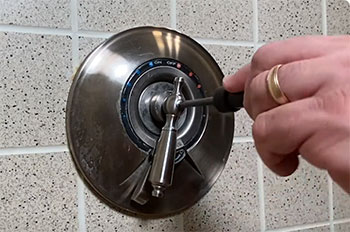
Usually not.
One advantage of the Symmons Temptrol platform is that many old valves can be rebuilt from the front without opening the wall.
A valve body may have been installed decades ago and still accept current service parts.
Complete valve replacement becomes more reasonable when:
- Valve body is cracked
- Internal threads are damaged
- Seat threads are destroyed
- Severe corrosion affects the body
- Plumbing around the valve is failing
- You are already remodeling the shower
- You want to change to a completely different valve system
For a simple failure to shut off, start with service parts before considering demolition.
Can You Shut Off Water at the Symmons Valve?
Some Temptrol valve bodies include integral service stops.
These let you isolate the hot and cold water at the valve itself during maintenance.
Other installations do not have service stops.
If your valve does not have them, you may need to shut off:
- Bathroom branch supply
- Hot and cold distribution lines
- Main household water supply
Never remove the spindle or cap assembly while the valve is pressurized.
What If the Shower Will Not Stop Flowing at All?
A slow drip is one thing.
Full water flow that cannot be stopped is more urgent.
If turning the handle fully OFF does not significantly reduce flow:
- Shut off the water supply.
- Do not force the handle.
- Inspect the handle-to-spindle connection.
- Check whether the spindle is turning.
- Service or replace the spindle and seats as needed.
If the spindle turns but has no control over water flow, internal damage may be substantial.
Also Read: Differences Between Pfister Verve And Windsor Shower Valves.
Symmons Temptrol Drips Only From the Showerhead
If you have a shower-only Temptrol valve, water dripping from the showerhead after the valve has been off for a short time usually points toward the spindle washers or seats.
However, a few drops immediately after showering can simply be water draining from the shower arm and showerhead.
A true valve leak continues well after the remaining water should have drained away.
Tub Spout Keeps Dripping
On a tub-and-shower Temptrol system, continuous dripping from the tub spout while the valve is OFF points to the same primary sealing components:
- TA-9 washers
- TA-4 seats
- TA-10 spindle
The tub diverter does not normally control whether water enters the valve.
It simply redirects water between the tub spout and showerhead.
So replacing the diverter usually will not fix a valve that cannot shut off.
Only Hot or Only Cold Water
This is a different Temptrol problem, but it often appears at the same time as spindle issues.
If you suddenly get only hot or only cold water, the pressure-balancing shuttle inside the TA-10 may be stuck.
Common causes include:
- Mineral buildup
- Debris
- Corrosion
A functioning shuttle should move freely.
Cleaning may restore operation.
If not, replace the TA-10.
Preventing Future Symmons Valve Problems
Temptrol valves can last for many years, but water quality has a major effect on service life.
A few useful habits include:
- Repair small drips before they worsen.
- Address hard-water buildup.
- Avoid forcing a stiff handle.
- Flush piping after plumbing work.
- Use genuine or properly compatible replacement parts.
- Replace cap gaskets whenever the valve is opened for major service.
- Inspect seats when replacing worn spindle washers.
Repeatedly tightening or forcing a worn valve usually makes the eventual repair harder.
Also Read: Differences Between Delta R10000 And R11000 Shower Valves.
FAQs About Shower Valves Staying On
Common reasons a shower valve fails to fully shut off water include worn seals/washers allowing leaks, obstruction in the cartridge preventing limit stops from sealing, bent cartridge rods, loose handle failing to properly rotate components, and excess water pressure overpowering the closed valve.
If water continues flowing after turning the shower off, it is typically due to a damaged cartridge not closing properly, limit stops blocked with debris, worn seals/washers creating internal leaks, or backflow contamination allowing water crossover past the closed valve.
Inside Symmons cartridges, the limit stops are movable plastic components that seal off the hot and cold inlets when rotated into the closed position by the handle. Their failure to fully seal allows continuous water flow.
To stop water flow on a leaking shower valve, firmly rotate the handle to the off position, shut off main/supply valves temporarily, inspect and clean or replace the cartridge, check for proper handle closure, and consider water pressure reduction if flow exceeds the cartridge rating.
Final Thought
When a Symmons shower valve won’t shut off, start with the sealing components rather than assuming the entire valve needs replacement.
A continuing drip usually points toward the TA-9 hot and cold washers. If new washers don’t stop it, inspect the TA-4 valve seats. If the spindle is corroded, damaged, or internally seized, replacing the TA-10 is usually the next step.
That serviceability is one of the biggest strengths of the Temptrol design.
Even an older valve can often be restored without opening the shower wall or replacing the complete rough-in valve.
Recent Posts
2026 Bathroom Remodel Estimator Bathtub to Shower Conversion Cost Calculator Accurately calculate the true cost of converting your old bathtub into a modern walk-in shower. Estimates acrylic...
I used the Philips Multigroom 5000 for several weeks of beard hair and body grooming while tracking cutting performance battery life ease of cleaning and everyday versatility.You should buy this...