
The main difference between water-resistant drywall and cement board is where each belongs.
Water-resistant drywall is designed for humid or occasionally damp areas. Cement board is designed to remain stable even when exposed to repeated moisture, making it the better tile substrate for showers and other direct-wet areas.
But there’s one important catch: standard cement board is usually water-durable, not automatically waterproof.
A Quick Comparison Table
| Feature | Water-Resistant Drywall | Cement Board |
| Core material | Gypsum | Cementitious |
| Moisture resistance | Better than standard drywall | Excellent |
| Direct wet areas | Generally not the first choice | Yes |
| Shower walls | Usually no for ordinary greenboard | Yes |
| Bathroom ceilings | Often suitable if product allows | Possible, but heavier |
| Behind tile | Dry/damp areas | Excellent |
| Waterproof by itself | No | Usually no |
| Mold resistance | Improved products available | Inorganic board itself resists deterioration |
| Cutting | Easy | Harder/messier |
| Weight | Lighter | Heavier |
| Finishing for paint | Easy | More work |
| Fasteners | Drywall screws as specified | Corrosion-resistant backer-board fasteners |
| Best use | Humid walls and ceilings | Tile in wet or demanding areas |
Key Differences Between Water Resistant Drywall and Cement Board
Now you know the key differentiating aspects in brief, but for mitigating your curiosity regarding cement board or drywall in the bathroom, you will get to know about all those mentioned aspects in detail in this part.
- Availability
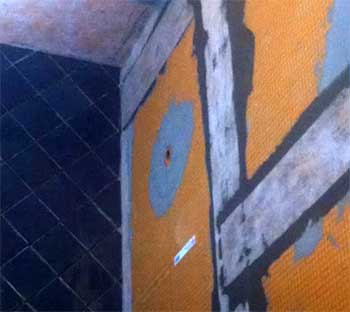
You will mostly see people using drywall for their bathroom rather than cement board, mostly. It is because of its availability of it.
Drywall is widely available around the country and quite popular.
But cement board is not as available as the drywall, as a result, people tend to be more invested in the other counterpart.
- Pattern Of The Surface
Drywall is thick when you compare it with the cement board. There are so many patterns on the surface of the drywall when you look at it closely.
But cement boards do not come with the mentioned thickness like the drywall also the surface is also relatively plain.
- Pricing Comparison
Pricing plays an impactful role when you are thinking about purchasing something. So, when you are on a tight budget, you are most likely to prefer the drywall.
The reason is that drywall is significantly cheaper to avail. But cement board comes with a higher price. So, before taking it into the consideration, people will think about so many things to validate the investment.
Having a cheaper price is another reason why people are keener to purchase drywall for their bathroom or kitchen while not considering the other available alternatives.
- Easiness Of Installation
When you hire a professional for drywall installation, then you will get to know that the process of drywall installation is really simple not taking much time and effort for them for years and years of practice.
On the other hand, it would take significant effort to do the installation job of the cement board.
- Less risky
As the drywall panels are light, the chances of the workers getting hurt during the installation job are very low. On the other hand, there are several cases of injuries in the case of working with the cement board.
- Strong base
When you pick the cement board, you will get a very strong base while doing the tile installation. But this strong base will not be there when there is drywall instead of cement board.
- Emergency repair
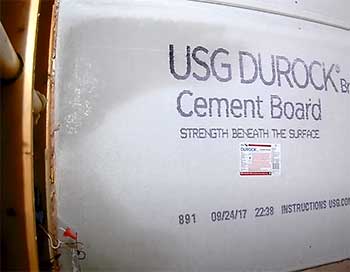
You may need to work on the wall surface of the bathroom and kitchen on an urgent basis sometimes.
In such urgent need, working with the drywall is the best option to do.
You can do the repair job in the shortest possible time this way.
But for the cement board, it will take a significant amount of time, money, and effort.
- Easiness of Transportation
Due to having significantly lightweight, it would be extremely easy to transport the drywall to the destination. But it would be the opposite for the cement board.
It would take more labor and therefore will cost you more money.
- Fire Protection And Heat Resistance
Needless to say, despite having some disadvantages, the cement board is hardy. It can resist fire to a great extent also it can resist heat as well. This feature does not go with the drywall, though.
So, these are some significant differentiating aspects of the drywall and cement board. I hope by now you have decided about the ideal one for you.
Also Read: Differences Between Redgard And Schluter.
Is Cement Board Waterproof?
Standard cement board generally should not be described as completely waterproof.
Products such as Durock and WonderBoard are extremely resistant to water damage, but manufacturers distinguish between:
- Water-durable board
- Waterproof barrier
That distinction matters.
If materials behind the board need protection, install the appropriate:
- Surface waterproofing membrane
- Sheet membrane
- Behind-board moisture barrier
according to the specific system.
What About Waterproof Cement Board?
Newer specialty products can change this comparison.
For example, some newer cement boards are manufactured with waterproofing built into the board.
When installed with the manufacturer’s seam tape and specified mortar or accessories, they can form a waterproof tile substrate without applying a separate liquid membrane over the whole board.
Do not assume this applies to every cement board.
Check the exact product.
Which Is Better Behind Bathroom Tile?
It depends on the location.
Tile Outside Wet Areas
For a bathroom wall that receives very little direct water, suitable water-resistant drywall can work beneath tile if the tile and adhesive system allow it.
Examples include:
- Vanity backsplash
- Decorative wall tile
- Half-height wall tile
- Areas outside the shower
Tile Inside Wet Areas
For:
- Shower walls
- Tub surrounds with showers
- Wet-room walls
cement board or another approved wet-area backer is usually the better choice.
Also Read: Is Flume Water Monitor Worth It?
Which Is Better for Bathroom Walls Without Tile?
Water-resistant drywall.
If you’re going to paint the wall, drywall is dramatically easier to finish.
You can:
- Tape seams
- Apply joint compound
- Sand
- Prime
- Paint
Cement board has a rougher surface and is designed primarily as a substrate.
Using cement board throughout an entire painted bathroom usually adds:
- Cost
- Weight
- Cutting difficulty
- Finishing work
without providing much benefit.
Which Is Better for a Bathroom Ceiling?
Water-resistant or mold-resistant drywall is usually more practical for a typical bathroom ceiling, assuming the product and local requirements allow it.
Advantages include:
- Lower weight
- Easier finishing
- Smoother painted surface
- Faster installation
Cement board can be used in some ceiling assemblies, especially when tile is planned, but framing and fastener requirements become more important because of its weight.
Which Is Better Above a Shower?
This depends on whether that area receives direct water.
A painted ceiling above a typical shower may use an appropriate moisture- and mold-resistant gypsum panel.
If the ceiling is:
- Tiled
- Very low
- Part of a steam enclosure
- Exposed to significant direct water
the assembly requirements can change considerably.
Steam showers in particular require a specialized waterproofing and vapor-management system.
Which One Stands Out For Your Bathroom?
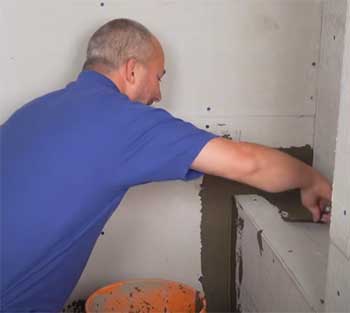
As you can see, there is some significant difference between drywall and cement board.
Now the decision comes to you. How long can you visualize yourself utilizing the toilet? Is it for the long term or short time?
If you are thinking long-term, then I would suggest you go for the hardiness of the cement board, if you find it available.
If you are thinking short time, then drywall should be the best option to meet your need.
Either way, it is you who is going to take the final decision, according to your budget and planning.
Frequently Asked Questions (FAQs)
Though cement boards are not waterproof they are water-resistant.
Some people may always prefer having drywall for the wall and ceiling of their bathroom and kitchen. But is true that cement board can be a perfect alternative to that as well.
The idea is to make a semi-cement tile backer that isn’t as sturdy as cement but makes up for cost-effectiveness and flexibility.
Cement boards have better longevity than gypsum panels. It is also resistant to mildew and mold.
Wrapping Things Up
If you know about your requirement, I am sure by now you know which one you should pick regarding water-resistant drywall vs. cement board.
Drywall is the most available and uncomplicated one, whereas you cannot deny the robustness of the cement board for longevity.
I am sure you are going to pick the most suitable one to serve your purpose.
Cheers!
Recent Posts
2026 Bathroom Remodel Estimator Bathtub to Shower Conversion Cost Calculator Accurately calculate the true cost of converting your old bathtub into a modern walk-in shower. Estimates acrylic...
I used the Philips Multigroom 5000 for several weeks of beard hair and body grooming while tracking cutting performance battery life ease of cleaning and everyday versatility.You should buy this...