
A toilet not used for months usually isn’t ruined. The bigger concerns are stagnant water, an evaporating trap seal, mineral buildup, and tank parts that may stick or leak when the water is turned back on.
Before using it normally, inspect the bowl and tank, restore water if necessary, and perform a few controlled flushes.
Here’s what can happen—and the safest way to restart it.
What Happens When a Toilet Sits Unused?
Several things can change while a toilet remains unused.
| What Happens | Possible Result |
| Bowl water evaporates | Sewer odor may enter the room |
| Tank water sits stagnant | Film, odor, or discoloration |
| Rubber seals age | Toilet may run or ghost flush |
| Mineral deposits form | Fill valve or flush valve may stick |
| Shutoff valve remains untouched | Valve may become stiff |
| Water supply was shut off | Tank will need to refill before use |
| Cold property wasn’t winterized | Possible freeze damage |
| Pests gain access through dry trap | Possible insects in severe cases |
Most of these problems are manageable.
1. Water in the Toilet Bowl Can Evaporate
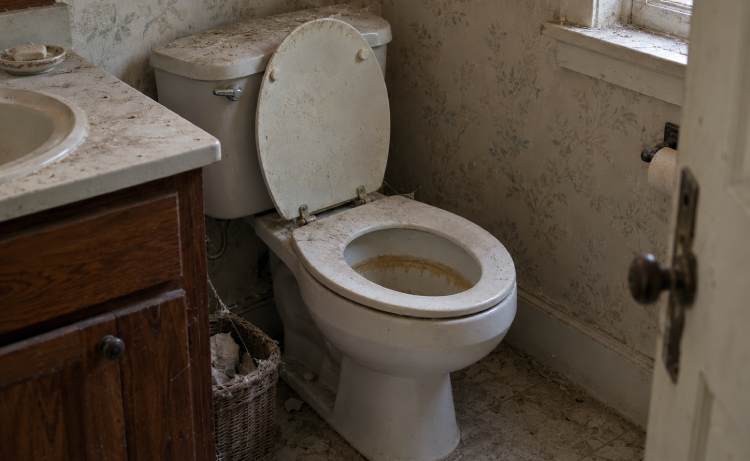
A toilet bowl normally contains water for an important reason.
The water sitting in the toilet’s internal trap creates a trap seal between the bathroom and the drain system.
That water helps prevent sewer gases from traveling through the toilet and entering the room.
If the toilet is unused long enough, some of this water can evaporate.
How quickly that happens depends on:
- Room temperature
- Humidity
- Air movement
- Toilet trap design
- Length of vacancy
A toilet in a warm, dry, ventilated building can lose water faster than one in a cool, humid room.
Why Does an Unused Toilet Smell Like Sewer?
If you return after several months and notice a sewer-like odor, check the bowl first.
If the water level is very low or the bowl is nearly dry, the trap seal may have been lost.
This can allow drain-system odors into the bathroom.
What to Do
Slowly pour water into the toilet bowl until the normal standing-water level is restored.
Then ventilate the room.
If the smell disappears after restoring the water seal, evaporation was probably the cause.
If the odor remains despite having normal bowl water, investigate other possible sources such as:
- Dry floor drain
- Dry sink or shower trap
- Loose toilet seal
- Drain or vent problem
Don’t automatically blame the toilet.
Also Read: Is Krazy Klean Toilet Cleaner Worth It?
2. Stagnant Water May Smell or Look Dirty
Water that sits for months can develop:
- Musty odor
- Surface film
- Mineral deposits
- Discoloration
- Biofilm
The toilet may look dirty even though nobody has used it.
This does not necessarily indicate a sewage backup.
The tank can develop deposits too, particularly if the home’s water contains:
- Iron
- Manganese
- Calcium
- Magnesium
- Sediment
A light cleaning and several flushes are often enough.
3. A Ring Can Form at the Bowl Waterline
An unused toilet commonly develops a visible ring exactly where the water has been sitting.
As water slowly evaporates, dissolved minerals remain behind.
You may see:
- White scale
- Brown staining
- Rust-colored marks
- Gray deposits
Hard-water areas are especially prone to this.
Use a toilet-safe cleaner and a toilet brush rather than aggressively scraping the porcelain with metal tools.
Persistent mineral deposits may require a cleaner specifically intended for limescale or hard-water stains.
Follow the toilet manufacturer’s cleaning recommendations.
4. The Toilet May Run After You Start Using It Again
A toilet that worked normally before being abandoned may run after months of inactivity.
Possible causes include:
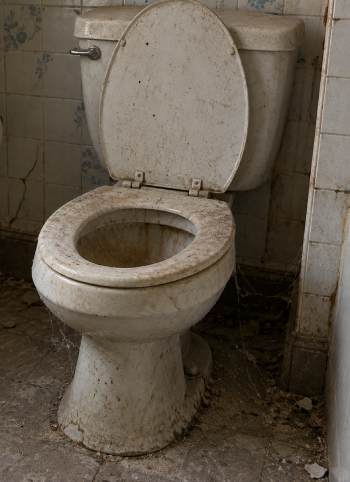
- Dirty flapper
- Hardened flapper
- Canister seal not seating properly
- Fill valve sticking
- Mineral deposits
- Incorrect water level
- Debris entering the fill valve
Remove the tank lid and observe the first few flushes.
Make sure:
- The flush valve closes.
- The fill valve opens.
- Tank fills normally.
- Water stops at the correct level.
- Water is not continuously entering the overflow tube.
If it keeps running, don’t ignore it.
5. The Flapper or Canister Seal May Leak
Many toilets use either:
- A rubber flapper, or
- A canister-style rubber seal
These components naturally deteriorate with age and water conditions.
Months of non-use do not automatically destroy them, but an older seal may fail around the same time the toilet is returned to service.
Symptoms include:
- Toilet refills randomly
- Tank water slowly disappears
- Water ripples in the bowl
- Toilet runs every few minutes
This is commonly called ghost flushing or phantom flushing.
Simple Test
Add a few drops of food coloring to the tank.
Don’t flush.
Wait about 10–15 minutes.
If colored water appears in the bowl, the flush-valve seal is leaking.
Clean or replace the correct seal for your toilet.
6. Fill Valve Can Stick or Refill Slowly
The fill valve has moving parts that regulate water entering the tank.
After a long period without operation, you may notice:
- Very slow filling
- No refill
- Loud filling noise
- Water that doesn’t shut off
- Fill valve sticking
Sediment can also enter when the water supply is restored after being shut down.
If the toilet fills slowly, first check that the shutoff valve is fully open.
Then inspect the fill valve.
A fill valve that is dirty may be serviceable, while an old or damaged valve is usually inexpensive to replace.
7. Don’t Immediately Force an Old Shutoff Valve
If the toilet’s water valve has been untouched for months or years, turn it carefully.
Older shutoff valves can become stiff or corroded.
Forcing one aggressively can cause:
- Stem leaks
- Broken handle
- Internal failure
- Water leak
If the valve refuses to move with reasonable pressure, don’t attack it with pliers.
A plumber may need to replace it.
This is particularly important in a vacant home where unnoticed water leakage could cause substantial damage.
Also Read: Is EC30 Toilet Cleaner Worth It?
How To Use A Toilet Again After Months of Non-Use?
Use a controlled restart rather than immediately flushing repeatedly.
Step 1: Inspect the Area
Look around the toilet for:
- Water damage
- Mold
- Cracked porcelain
- Rust
- Loose supply connections
- Pest activity
Check the ceiling below the bathroom as well if accessible.
Step 2: Check the Bowl Water
There should be water in the bowl.
If the trap is dry or almost dry, slowly add water.
Wait briefly and make sure the water level remains reasonably stable.
Step 3: Inspect the Tank
Remove the tank lid.
Look for:
- Cracked parts
- Heavy scale
- Deteriorated rubber
- Rusted hardware
- Disconnected chain
- Stuck float
A little discoloration is not necessarily a problem.
Step 4: Inspect the Supply Line
Check the hose between the wall valve and toilet.
Replace it if you see:
- Cracks
- Bulging
- Severe corrosion
- Damaged fittings
Step 5: Turn Water On Slowly
If water was shut off, open the toilet supply valve gradually.
Watch every connection.
Stop immediately if you see leaking.
Step 6: Let the Tank Fill Completely
Don’t flush the instant water starts flowing.
Allow the tank to reach its normal fill level.
Make sure the fill valve stops.
Step 7: Perform One Test Flush
Flush once and observe:
- Bowl evacuation
- Tank refill
- Base of toilet
- Tank bolts
- Supply hose
- Flush valve
Wait until the refill finishes.
Step 8: Flush Again
If everything behaves normally, flush another one or two times.
This helps move fresh water through the toilet and drain.
Should You Flush a Toilet Several Times After Months Away?
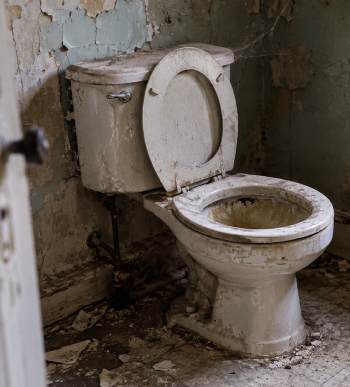
Usually, yes.
A few normal flushes are useful after extended non-use because they replace stagnant water in the toilet and move fresh water through the internal passages.
There’s no need to flush it 10 or 20 times.
Two or three normal flushes are usually enough when the toilet is operating correctly.
Smart toilets with more complex internal water pathways may have their own manufacturer-specific restart procedures.
What If the Bowl Is Completely Dry?
Don’t flush an empty, dry toilet immediately if you are uncertain about its condition.
First add water to the bowl manually.
This:
- Restores the trap seal
- Lets you see whether the bowl holds water
- Reduces sewer odor
- Gives you a chance to inspect for leaks
If the water quickly disappears, there may be a crack, unusual siphoning issue, or other plumbing problem that needs investigation.
Some gradual movement in water level can be normal, but an empty bowl that repeatedly loses essentially all its water deserves attention.
Could Sewer Gas Be Dangerous?
Sewer gas should not be intentionally allowed into occupied living spaces.
At low levels, the first noticeable sign is often simply an unpleasant odor.
If a vacant property has strong sewer odors, ventilate the building and refill all plumbing traps, including:
- Toilets
- Sinks
- Showers
- Bathtubs
- Floor drains
- Laundry drains
If a strong odor continues after all traps contain water, have the drainage and vent system inspected.
Can Bugs Come Through an Unused Toilet?
A functioning water-filled toilet trap creates a substantial barrier between the bathroom and drainage system.
If the trap dries completely, that barrier disappears.
In some circumstances, insects or other pests associated with drain systems may then have easier access.
Keeping water in unused plumbing traps is therefore useful for more than odor control.
Can the Wax Ring Dry Out?
A toilet’s wax ring does not rely on toilet flushing to stay wet.
So a toilet sitting unused for a few months does not automatically dry out the wax ring.
However, you can still discover a failed seal after returning if:
- Toilet has shifted
- Floor moved
- Wax ring was already compromised
- Flange is damaged
Watch the toilet base during your first test flushes.
Water around the base is not normal.
What If Water Leaks Around the Base?
Stop flushing.
Common causes include:
- Failed wax seal
- Loose toilet
- Broken flange
- Cracked bowl
Dry the floor thoroughly and confirm that the water isn’t simply condensation or a leak from the tank.
A leak that appears around the base primarily during flushing strongly suggests a drain-seal problem.
Don’t keep using the toilet until it is repaired.
Also Read: Is BLUELAND Toilet Cleaner Worth It?
What If the Toilet Is Clogged After Sitting Unused?
Non-use itself usually does not clog a clean toilet.
But problems can occur from:
- Existing obstruction
- Mineral buildup
- Rodents or debris in unusual vacant-property situations
- Drain-line problems
- Dried material left in the bowl before vacancy
If water rises unusually high during your first flush, stop flushing again.
Use a toilet plunger.
For a persistent obstruction, use a closet auger or have the drain inspected.
Repeated flushing can overflow the bowl.
What About a Vacation Home?
A vacation property requires more planning because plumbing may sit unused repeatedly.
Before leaving for months, consider:
- Cleaning toilets
- Checking for leaks
- Turning off water where appropriate
- Maintaining trap seals
- Winterizing in freezing climates
- Following manufacturer instructions for smart toilets or bidet seats
If the building will remain heated and water stays on, arrangements differ from a property being fully winterized.
Freezing Weather Changes Everything
Leaving a toilet unused in a heated home is one thing.
Leaving it full of water in a building that can freeze is completely different.
Water remains in:
- Toilet tank
- Bowl trap
- Fill valve
- Supply line
If that water freezes, expansion can crack:
- Tank
- Bowl
- Valve
- Plumbing lines
Vacant homes in freezing climates need appropriate winterization.
That may involve draining plumbing and using plumbing antifreeze in traps according to accepted winterization procedures.
Do not use automotive antifreeze.
What About Smart Toilets and Bidet Toilets?
Electronic toilets can require additional steps after long-term inactivity.
Depending on the manufacturer, long-term storage instructions may include:
- Disconnecting electrical power
- Draining internal water
- Removing remote batteries
- Protecting against freezing
When bringing an electronic toilet back into service, manufacturers may recommend several flushes to clear stagnant water from internal pathways.
Always check the instructions for that specific model.
Also Read: Is Bowl Refresh Toilet Cleaner Worth It?
How to Keep an Unused Toilet From Drying Out
If a home will remain accessible, the simplest solution is to have someone periodically flush the toilet.
For a longer vacant period, property-maintenance professionals sometimes use methods intended to slow trap evaporation.
But avoid improvising with chemicals that can damage seals or create hazards.
For most occupied or periodically visited homes, simply running water through every fixture occasionally is the safest approach.
Remember to include rarely used:
- Guest bathrooms
- Basement toilets
- Floor drains
- Utility sinks
- Showers
A toilet isn’t the only trap that can dry out.
Should You Turn Off the Toilet Water During a Long Absence?
Turning off the home’s water supply can reduce the potential damage from a plumbing failure while you’re away.
But shutting off the water does not remove existing water from toilet traps or tanks.
For a long vacancy, especially where freezing is possible, a complete property winterization plan is more appropriate than simply closing the toilet valve.
Your approach should consider:
- Climate
- Heating
- Length of absence
- Plumbing system
- Insurance requirements
- Smart appliances
- Fire-sprinkler systems
Signs the Toilet Needs Repair Before Regular Use
Stop and repair the toilet if you notice:
- Continuous running
- Water leaking at the base
- Tank leak
- Cracked porcelain
- Tank not refilling
- Shutoff valve leaking
- Repeated ghost flushing
- Severe clogging
- Bowl water disappearing unusually quickly
- Strong sewer odor that returns after refilling traps
A toilet sitting unused isn’t automatically unsafe, but obvious leaks should never be ignored.
Also Read: Is Happy Toilet Cleaner Worth It?
Frequently Asked Questions (FAQ)
Well, the water barrier will evaporate when you don’t flush the toilet for a long time. Meaning, you will be smelling sewer smell in your shower!
A toilet should be flushed at least once a week. That will ensure water in the P-Trap so that sewer gas can’t make its way into the house.
To get your toilet clean and fresh after a long vacation, put a cap of bleach in the toilet and cover the porcelain with a saran wrap tightly. When you are back, just flush your toilet and it will be ready to serve you again!
Your unused toilet smells because there is no water in the P-Trap. Flush it and the smell should go away. If not, pour a cup of vinegar and a quarter cup of baking soda down the drain. Let it sit for 20 minutes and finish by running hot water.
The dirt you are talking about is mostly likely the mineral buildup around the siphon jets of the toilet (located underneath the toilet bowl rim). Cover the porcelain with a saran wrap if don’t use your toilet for a long time.
Of course, you should turn off water to the toilet before vacation including electricity and so on.
Closing Remarks
As you can see, there could be several issues when toilet not used for months for whatever reason. If you don’t want to face those troubles and have a smelling shower, prep your toilet as mentioned above.
Also, it’s not hard to revive your toilet either. Give it a deep clean with any toilet cleaner and keep it cleaning on a regular basis. It will get better day by day!
One thought on “Toilet Not Used For Months: Get It Working And Get Rid of Sewer Smell!”
Leave a Reply
Recent Posts
2026 Bathroom Remodel Estimator Bathtub to Shower Conversion Cost Calculator Accurately calculate the true cost of converting your old bathtub into a modern walk-in shower. Estimates acrylic...
I used the Philips Multigroom 5000 for several weeks of beard hair and body grooming while tracking cutting performance battery life ease of cleaning and everyday versatility.You should buy this...
I have 2 questions – on your article- when you say. Long time, what is a long time? As a long time could mean different times for everyone. Are you referring to weeks? Or how many months is a long time.?
And my second question- does it matter on weather conditions? Of tia summer of winter?
Thank you in advance.