
Seeing standing water inside a shower drain can look like a clog, but it isn’t always a problem.
If the water is several inches below the grate and sitting in the P-trap, that’s normally exactly what you want. The trapped water blocks sewer gases from entering your bathroom.
But if water sits high in the drain, drains slowly, backs onto the shower floor, smells bad, or rises when other fixtures run, something needs attention.
Standing Water In A Shower Drain: Quick Guide
| What You See | Is It Normal? | Likely Explanation |
| Water deep below drain opening | Usually yes | Normal P-trap water |
| Water visible in P-trap | Yes | Required water seal |
| Water just below grate | Maybe | Drain design or partial clog |
| Water on shower floor after use | Usually no | Clog or poor floor slope |
| Water drains very slowly | No | Hair/soap blockage |
| Water rises when toilet flushes | No | Drain/vent problem |
| Bubbling or gurgling | Usually no | Restriction or venting issue |
| Sewer smell despite standing water | No | Dirty drain, trap, or plumbing problem |
| No water visible and sewer smell | No | Dry trap |
| Water remains in linear drain channel | Small amount may occur | Channel design, leveling, or buildup |
Why Is There Water Inside My Shower Drain?
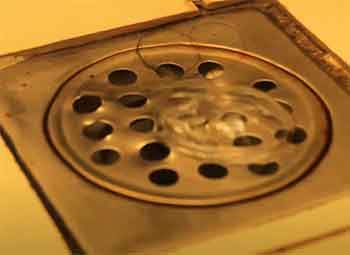
The most common reason is surprisingly simple:
Your shower has a P-trap beneath it.
A P-trap is the curved portion of the drain pipe below the shower. After water flows through the drain, some remains inside the curved section.
That water forms a seal between your bathroom and the drainage system.
Without it, sewer gases could travel directly through the pipe and into the room.
So water inside the drain isn’t automatically evidence of poor drainage.
In many cases, it shows that the plumbing trap is doing its job.
What Does a Shower P-Trap Look Like?
Imagine a pipe shaped somewhat like the letter U.
Water enters one side, passes through the bend, and exits through the other.
Because of that curved shape, a small amount of water always remains behind.
From above the shower drain, you may be able to see this water when:
- The trap is relatively close to the floor
- The drain opening is large
- The grate has been removed
- You shine a flashlight down the pipe
That can make it appear as though your drain is clogged even when the shower drains perfectly.
The Signs of The Clogged Drain
So, how to know that there is a clogged drain inside your bathroom?
Well, the sign is pretty straightforward if you ask me. After having a shower inside your shower system, you will start noticing that the water is standing inside the shower which implies that the water is not getting the way to flow.
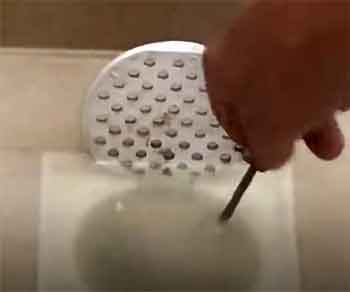
That happens when there is a blockage inside the pipe of the shower.
This is the sign that should be counted as a clear indication of a clogged drain inside your shower.
Some clog is pretty simple to get rid of.
But when you notice this a regular scenario inside your shower, then it clearly signifies there are multiple clogs in the shower drain.
Some clogs can be so deep that it would be very hard for you to reach them without the help of a plumber. So, when you think it is necessary then without any further delay you can always call a professional plumber to do the job on your behalf.
Ways To Get Rid Of A Clogged Drain
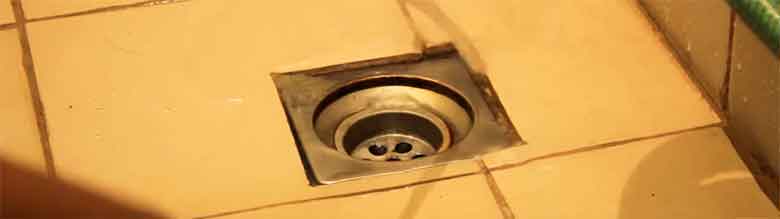
The shower drain clog that we are talking about does not happen overnight. It develops gradually inside the shower drain. Once it is developed, then there are a few ways of getting rid of those clogged drains.
In this section, we will try to know about those ways.
- Pouring Boiling Water
This is one of the most effective methods. Doing it at least once a week can ensure that the ingredients that cause the shower drain to clog can be melted away.
It will not work on the things like the hair or other stuff. But when there is stuff like the soap and grease then it will definitely work.
When you pour the hot water to go through the shower drain, then you are making sure that all the materials that get removed with temperature can be removed.
You can keep this in your bathroom cleaning routine at least once a week. But make sure the temperature is not too hot as it will hurt the drain adversely.
- Using Vinegar Or Baking Soda
These are some helpful kitchen ingredients that can serve a lot when it comes to getting rid of the clog in the bathroom.
For a deeper, bigger blockage, a mix of baking soda and vinegar can work as a natural solution for getting rid of the hair and other harsh chemicals.
You need to pour a cup of vinegar into the drain, then a cup of baking soda in the same place. Let it rest for some time, after that pour some hot water through the drain. Some people also do it by mixing the ingredients.
- Using A Plunger
In every home, you will find a plunger. It is an effective solution for getting rid of hair blockage. But this method may not be successful for all the blockages that you may find in the drain of the shower.
It is most effective for the clog that is caused by the hair to get the clog out or any other external thing that can accidentally get stuck inside the shower drain.
There are some other ways of getting the work done like adding petroleum jelly to the edge of the suction pad, this way you will be able to achieve better sealing.
- Trying Out Commercial Drain Cleaning Products
There are several cleaning products available in the market that you can try out to clear your bathroom drain. Some products have got some good reviews from the users, and you can for sure give it a try.
- Using A Bare Hand To Clean
You can clean the blockage in the shower drain, sometimes just with your bare hand, when the block is not deeply rooted.
For hygiene purposes, you can put on a glove before putting your hand on the shower drain. This will be all that you will need to clean the clogged drain.
So, these are the most common ways of getting rid of the clogged drain inside your shower, you can try out any of those.
Watch this video to learn how you can do this just with standing water!
How Can You Prevent Future Clogged Drain Issues?
As you know, the shower drain clogs are developed gradually, there are some ways you can prevent them from being clogged in the first place.
- Regular cleaning of the shower and drain
You can maintain a routine to clean the shower and the drain of your bathroom. In this way, all the stuff like the hair, soaps, grease will not be able to accumulate in the shower drain over time.
The routine of cleaning the bathroom at least once a week can save you from the shower drain-clogging hassle for sure.
- Having A Drain Protector Inside Your Shower
You can keep a drain protector in your shower. It will keep all the stuff on the surface of it as those will not find a way to go to the path of the shower drain and eventually creating a stubborn clog.
This tool can work like magic when it comes to hair. All the hair gets stuck on it without falling to the shower drain to create a clog.
- Using loose soap rather than the hard one
We all know when we use a hard soap then not all parts of the soap get dissolved. Some of those parts may get stuck on the drain, and eventually, it may cause that blockage issue.
To avoid it, you can go for using the loose soap instead. It is always better to be safe than sorry.
Frequently Asked Questions (FAQs)
Most of the time the reason behind the smell is the debris that is stuck in the shower.
Yes, when you put too much pressure on the plunger, then the shower drain may be harmed. Sometimes, it may not be able to get rid of the clog as well.
A P-trap is located under the shower drain hole.
Wrapping Things Up
Standing water inside a shower drain is often completely normal.
If you’re looking several inches down and seeing water in the P-trap while the shower itself drains quickly, there is probably nothing to repair.
The warning signs are different: water sitting on the shower floor, slow drainage, rising water, gurgling, recurring clogs, or interaction with toilets and other fixtures.
Start by removing visible hair and buildup.
If the shower still drains slowly—or other fixtures are affected—the problem may be deeper in the drain or vent system.
The important thing is to distinguish water that is supposed to stay in the trap from water that cannot get down the drain.
Recent Posts
2026 Bathroom Remodel Estimator Bathtub to Shower Conversion Cost Calculator Accurately calculate the true cost of converting your old bathtub into a modern walk-in shower. Estimates acrylic...
I used the Philips Multigroom 5000 for several weeks of beard hair and body grooming while tracking cutting performance battery life ease of cleaning and everyday versatility.You should buy this...