
If your Fluidmaster fill valve is leaking from the top, you usually don’t need to replace the entire toilet or even the complete fill valve immediately. In many cases, the problem comes from debris trapped inside the valve, a worn Fluidmaster 242 seal, or a top cap that is not seated correctly.
This problem is particularly common with Fluidmaster 400-series fill valves, including the popular Fluidmaster 400A.
Before buying a new valve, I recommend identifying exactly where the water is coming from. A fill valve spraying from underneath its top cap requires a different repair from a toilet where water is simply flowing into the overflow pipe.
In this guide, I’ll show you how to tell the difference, clean the valve, inspect the seal, replace a Fluidmaster 242 seal, and decide when replacing the entire fill valve makes more sense.
Why Is My Fluidmaster Fill Valve Leaking From the Top?
A Fluidmaster fill valve controls the water entering your toilet tank after every flush.
As the tank fills, the float rises. Once the water reaches the correct level, the valve shuts off.
If water leaks, sprays, or drips from the top of the valve, something may be preventing the internal components from sealing properly.
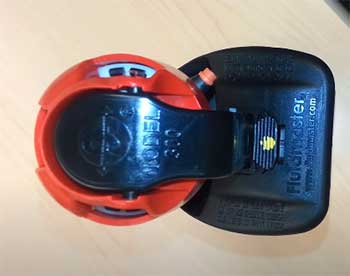
Common causes include:
- Debris or sediment inside the valve
- A worn Fluidmaster 242 seal
- An incorrectly installed top cap
- A cracked or warped cap
- Incorrect water-level adjustment
- Damage to the valve body
You may also notice hissing, slow filling, continuous running, or a valve that refuses to shut off.
Identify Where the Water Is Coming From
Before disassembling anything, remove the toilet tank lid and flush the toilet.
Watch the fill valve as the tank refills.
| What You Notice | Likely Cause |
| Water sprays from underneath the cap | Debris, seal, or cap problem |
| Water drips around the cap | Damaged seal or improperly seated cap |
| Water continuously enters overflow pipe | Water level too high or valve not shutting off |
| Valve turns on periodically | Possible flapper leak |
| Water leaks underneath tank | Supply connection or tank hardware |
| New seal does not stop leak | Damaged cap or valve body |
A true Fluidmaster fill valve top leak should not be confused with a flapper or supply-line leak.
How To Fix The Fluidmaster Fill Valve?
The process isn’t that difficult when it’s about fixing the Fluidmaster fill valve. You can do it yourself; all you have to do is follow some steps.
If you are experiencing any leaking issue from your fill valve, then it’s time you go through some repair on it.
Also, replacing the valve after five years can be good to maintain. This keeps away all the risks of flooding from the valve.
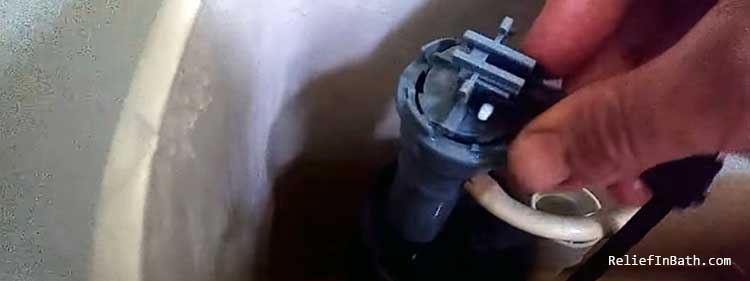
Now, for the repair work you don’t need too many things. You will only need the Fluidmaster fill valve cap replacement or replacement seal, a mug, and a pair of protective gloves.
Having these things is enough to proceed with the repair work. Here are the steps you need to go through to fix the fill valve.
- Turning Off Water
First of all, you have to look for the shutoff valve. You will need to turn it off, so the water supply stops into the toilet tank. Or else, you can’t even begin the repair process of the fill valve.
To turn off the water supply to the toilet tank, you simply turn the shutoff valve handle in the clockwise direction.
This should stop any water from going into the toilet tank. Then, you can proceed to the next steps.
- Flushing The Toilet
Next up, you have to flush your toilet. This will get all the remaining water in the tank out so that you can work on the tank and fill the valve correctly. This is also very important for the convenience of working.
- Removing The Plastic Cap Of The Valve
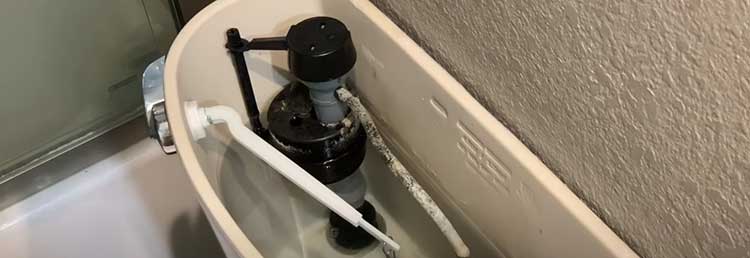
Now, if you face the toilet fill valve cap leaking issues, you have to start with removing that first.
When you clean up the whole tank and get rid of all the water, you should see a plastic cap on the fill valve. You have to remove that to proceed further.
You have to hold the fill valve shaft with one hand to remove it. Then, you have to slide up the shaft to push the float cup.
Make sure you grasp the shaft very firmly. Otherwise, the whole thing goes to waste.
Now, while holding the shaft, use your other hand to turn the cap that is placed on the fill valve. Try pushing down the cap while you turn it in the counterclockwise direction.
When you see the cap coming loose, simply take it off and keep it separately.
- Place A Mug On Top
After removing the cap, you have to take a cup or mug and place it on top of the valve upside down. You have to hold it there for a while as this relates to the next step.
- Flushing Shutoff Valve
While holding the cup with one hand, you have to turn the shutoff valve counterclockwise to open it with your other hand.
You will see water flowing from the fill valve and getting into the cup. Then the cup drives the water into the toilet tank. Now, you probably understand the use of the cup.
The reason for flushing the valve is simple; it takes away all kinds of debris you might have had on the valve. You have to finish this step by closing the valve.
- Removing The Old Seal
Here’s the part you should be concerned with the most. You have to remove the old seal of the fill valve to replace it with a new one. To do that, simply get the valve cap and take out the seal from there.
- Installing The New Seal
For installing the new seal, you have to position the seal properly first. The orientation of the seal has to be accurate. So, here’s how it goes.
You have to place it in such a way that the nipple of the seal fits it perfectly. It’s usually placed over a stainless-steel needle that you get in the cap.
You don’t get a perfect installation until the nipple on the seal goes inside the cap.
- Putting Back The Valve Cap
Once you have installed the new seal, you just have to go on reverse. You have to put the valve cap back in the valve shaft.
Instead of turning it counterclockwise, this time, you will be turning the cap clockwise to put it back in. Make sure to do it properly and keep it locked in place.
- Opening The Shutoff Valve
Next, you have to turn the handle of the shutoff valve counterclockwise to open it. This way, the water starts flowing inside the toilet tank once again.
- Refill your toilet tank
You have to finish off the process by refilling the toilet tank completely. After the tank is filled, you have to do a test flush.
This should tell you whether the problem is fixed or not. You can also try checking out for any leaks around the shutoff valve and the fill valve.
So, these were the steps you need to follow to fix the toilet fill valve cap spraying water. This mostly happens due to a leak that you can quickly fix by replacing the seal.
However, you can’t do this for just about any fill valve; it has to be a Fluidmaster fill valve. You may need to replace the whole valve for most other options rather than just the seal.
Now, you can also make sure you keep the fill valve through proper maintenance to avoid such problems. There are several things you can do. One of them is cleaning.
You have to maintain some rules for cleaning, such as cleaning any kinds of debris from the valve at least once a year.
With or without any issue, you should try following this. Try to avoid using bleach tablets and if you do, make sure to go through a routine inspection.
Following these simple things can help you avoid the problem for the most part. Now, watch the video explaining how to repair a Fluidmaster toilet fill valve.
FAQs: Fill Valve Leaking from Top
If your fill valve is spraying from the top, the most likely cause is an incorrectly set height or a loose connection with the fill tube. Make sure the valve is no more than 1” below the tank rim. Check that the tube is securely threaded onto the fill valve stem with no cracks.
If the water is leaking between the tank and bowl, there is likely an issue with the tank-to-bowl gasket. This rubber seal can become loose or warped over time, allowing water to drip down the exterior of the tank. Replacing this gasket should stop a toilet leak at the tank-bowl connection.
The main causes of a fill valve leak are a damaged flapper, sediment buildup preventing a good seal, incorrect fill height, or loose fill tube connection. Replacing the flapper, cleaning mineral deposits, and adjusting the fill valve height or tube fitting will typically fix a leaky fill valve.
Most Fluidmaster valves have a locking nut near the top of the valve body. Turn this nut counterclockwise to loosen and detach the top half of the valve so you can access the internal components and replace parts like the flapper. Make sure to realign any tabs before reattaching the top section.
Conclusion
When a Fluidmaster fill valve is leaking from the top, don’t immediately assume you need a complete replacement.
Start by identifying where the water actually escapes. Then remove the top cap, flush out sediment or debris, inspect the seal, and replace a worn Fluidmaster 242 seal if necessary.
For a Fluidmaster 400A, those relatively simple steps can solve many problems involving leaking, spraying, hissing, slow filling, or failure to shut off.
If you’ve already cleaned the valve and installed a new seal but water still leaks from the cap, inspect the cap and valve body carefully. A cracked, warped, or worn fill valve is usually better replaced than repaired repeatedly.
One thought on “Fluidmaster Fill Valve Leaking From Top? Reasons And What To Do?”
Leave a Reply
Recent Posts
2026 Bathroom Remodel Estimator Bathtub to Shower Conversion Cost Calculator Accurately calculate the true cost of converting your old bathtub into a modern walk-in shower. Estimates acrylic...
I used the Philips Multigroom 5000 for several weeks of beard hair and body grooming while tracking cutting performance battery life ease of cleaning and everyday versatility.You should buy this...
Hello Mr. Mitchell,
Flushing the valve and replacing the seal doesn’t always repair a leak at the top. I have replaced valves and seals before so I am familiar with the procedures. I had a leak at the top and flushed the valve several times and installed a new seal and while it slowed the leak it didn’t stop it completely. My best guess is because it is plastic it might have warped as I was able to slow the leak considerably but it still leaked for a little while even after the valve shut off the water. I don’t think it developed a hairline crack because flushing and replacing the seal did have some effect which would not have happened if there was a crack, but in the end I had to replace the valve.