
You should buy the tgin Butter Cream Daily Moisturizer if you are tired of your natural hair feeling like straw just hours after you have finished your morning routine.
I have found that this specific formula is a life-saver for those with high porosity 4C hair who feel like they are constantly losing a battle against dryness.
You should realize that this moisturizer doesn’t just sit on top of your strands; it penetrates and locks in hydration from root to tip.
I am confident that once you see the soft, frizz-free results, this will become your holy grail product.
My Journey with tgin Butter Cream: From Brittle to Bouncy
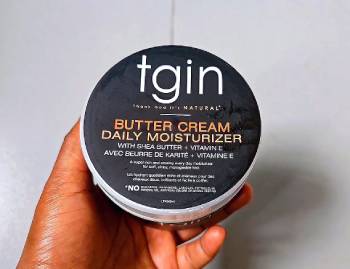
I remember the first time I held the tgin Butter Cream Daily Moisturizer in my hand; I was skeptical because I have been burned by “maximum hydration” claims so many times before.
I am a person who has struggled with 4C hair that seems to drink up water and oil only to end up dry and crunchy by the time I reach my office.
I noticed immediately that the texture of this cream is remarkably thick and rich, yet it feels surprisingly lightweight once you actually start working it through your curls.
The first time I applied it, I decided to test it on hair that hadn’t been washed in nearly three weeks—the ultimate challenge for any moisturizer.
I found that the slip was incredible, allowing me to finger-detangle sections that usually require a wide-tooth comb and a prayer.
I realized that unlike other creams that leave a white, chalky residue that takes hours to disappear, this butter cream melted into my hair almost instantly.
I am someone who values a pleasant sensory experience, and I found the scent to be light, clean, and not at all overpowering, which is a relief if you are sensitive to heavy perfumes.
I noticed that even after four days of sleeping on my satin pillowcase without adding any additional water or oil, my hair was still soft and pliable.
I eventually tried using it as a setting cream for a two-strand twist-out, and the results were nothing short of a miracle.
I found that my twists were defined, shiny, and most importantly, they didn’t feel greasy or weighed down.
I am consistently impressed by the fact that a little goes a long way; I have a 12oz jar that seems to be lasting forever despite my frequent use.
I realized that I no longer had to perform the full LCO method every other day just to keep my hair from breaking.
I found that my scalp felt calmer and less itchy, which I attribute to the Shea butter and Vitamin E working together to nourish my skin and strands simultaneously.
Maintenance Tips for Your tgin Butter Cream Routine
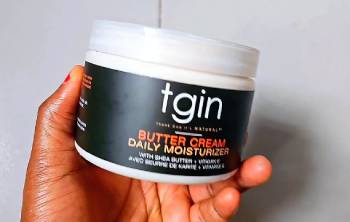
You should realize that the way you apply your moisturizer is just as important as the product itself for achieving maximum hydration.
Always applying the butter cream to slightly damp hair is a vital maintenance tip for locking in the water molecules before the butters seal the cuticle: I found that applying it to bone-dry hair doesn’t yield nearly the same softness.
Working in small, manageable sections is a key maintenance tip for ensuring even distribution from the roots to the very tips: you should notice that missed spots will lead to uneven frizz and tangles later in the week.
Warming the product between your palms before applying it to your hair is an essential maintenance tip for thinning out the butters and helping them penetrate: I found that this “melting” step makes the cream much easier to spread.
Cleaning the rim of your jar with a clean tissue after use is a smart maintenance tip for preventing the product from drying out and getting “crusty” around the edges: you should realize that a tight seal keeps the ingredients fresh.
Using a satin or silk scarf every single night is a mandatory maintenance tip for protecting the moisture you just added: I noticed that cotton pillowcases will literally suck the cream right out of your hair.
Clarifying your hair at least once a month with a sulfate-free shampoo is a crucial maintenance tip for removing any residual butters and oils: I found that this “resets” the hair so the next application of butter cream can work effectively.
Mist your hair with a little bit of warm water before adding a “refresh” layer of cream mid-week is a helpful maintenance tip: you should realize that adding more cream to dry hair can eventually lead to a greasy feel.
Storing your jar in a cool, dark cabinet away from the steam of the shower is a fundamental maintenance tip for preserving the Vitamin E and natural oils: I noticed that excessive heat can cause the butters to separate.
Using the “prayer hands” method to smooth the cream down the hair shaft is a necessary maintenance tip for laying the cuticle flat: I found this significantly increases the natural shine of my curls.
Massaging any leftover cream into your cuticles and hands is a final maintenance tip to avoid waste: you should realize that the Shea butter in this formula is excellent for your skin too.
Pros and Cons of tgin Butter Cream
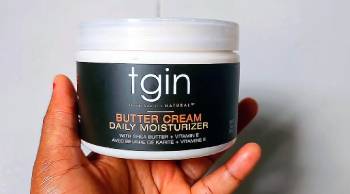
Pros of tgin Butter Cream: The Ultimate Hydration Hero
- Unmatched Long-Lasting Moisture Retention: It features a high concentration of Shea butter and Cocoa butter that creates a protective barrier around the hair shaft: I found that this is particularly effective for high porosity hair that usually loses moisture within minutes: this results in hair that stays soft for up to five days without needing a refresh: I noticed that my hair felt “silky” rather than just “wet.”
- Promotes Scalp Health and Growth: It utilizes Vitamin E oil to stimulate blood flow to the hair follicles while providing antioxidant protection: I found that my edges looked fuller and my scalp felt less tender after a few weeks of consistent application: this provides the foundation for healthy hair growth by preventing breakage at the root: I realized that the better blood flow really does make a difference in length retention.
- Superior Frizz Control and Definition: It features a smoothing formula that lays the hair cuticle flat to reflect light and eliminate fly-aways: I found that even in high humidity, my twist-outs held their shape and didn’t expand into a frizzy mess: this results in a high-definition look that looks professional and polished: I noticed that the natural shine was visible even in low-light settings.
- Clean and Safe Ingredient Profile: It utilizes natural ingredients like Honey and Shea butter without the use of harsh parabens, sulfates, or artificial colors: I found that my hair didn’t experience the “crunch” that often comes from synthetic polymers: this provides a safe environment for those with sensitive scalps or over-processed hair: I realized that tgin truly prioritizes the health of natural textures.
- Versatile Styling Performance: It features a thick, creamy consistency that doubles as a setting cream for various natural styles: I found it worked perfectly for braids, bantu knots, and wash-and-gos: this results in a simplified hair care shelf because you don’t need five different products for one style: I noticed that it provides a medium hold that remains flexible and touchable.
Cons of tgin Butter Cream: What to Keep in Mind
- Potential Weight for Fine Hair Types: It features a very dense and rich formula that can be overwhelming for those with type 2 or fine type 3 hair: I found that if you apply too much on thinner strands, it can lead to a limp or flat appearance: this results in a need for a very light hand during application: I noticed that low-density hair might struggle to absorb the heavy butters.
- Jar Packaging Hygiene Concerns: It utilizes a wide-mouth jar which requires you to dip your fingers in to retrieve the product: I found that if your hands aren’t perfectly clean, you risk introducing bacteria into the cream: this provides a slight maintenance challenge for those who prefer pump dispensers: I realized I had to be very careful to keep my jar stored in a cool, dry place.
- Richness May Cause Build-Up Over Time: It features heavy oils and butters that can accumulate on the hair if you do not use a clarifying shampoo regularly: I found that after a month of daily use, my hair needed a deep cleanse to feel “light” again: this results in a mandatory requirement for a solid wash day routine: I noticed that skipping a shampoo could lead to a duller look after a few weeks.
- Slightly Higher Price Point Than Basic Store Brands: It features a premium formulation that is reflected in its cost compared to standard supermarket moisturizers: I found that while it is effective, the initial investment might be higher for those on a strict budget: this provides a barrier for some, although the longevity of the jar helps offset the cost: I realized that you get what you pay for in terms of quality.
- Absorption Time on Low Porosity Hair: It utilizes thick butters that may sit on the surface of low porosity hair for several minutes before fully sinking in: I found that I had to use warm water or a steamer to help the product penetrate the hair shaft: this results in a bit of extra effort for those with closed cuticles: I noticed that the “melting” effect isn’t as instantaneous on low porosity types.
tgin Butter Cream Vs. Other Leading Moisturizers
- tgin Butter Cream Vs. Cantu Shea Butter Leave-In
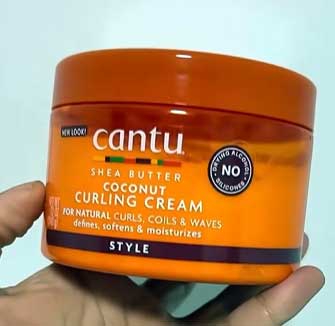
I found that while Cantu is very popular and accessible, it contains certain alcohols and silicones that can feel “waxy” over time.
You should realize that tgin Butter Cream feels much more nourishing and “natural” on the strands without that heavy, coated feeling.
I noticed that tgin provides significantly better moisture retention for 4C hair that lasts for multiple days.
I believe that Cantu is a decent budget option, but tgin is a superior professional-grade treatment for those serious about hair health.
I realized that the “crunch” factor is non-existent with tgin, whereas Cantu can sometimes leave the hair a bit stiff.
- tgin Butter Cream Vs. Shea Moisture Coconut & Hibiscus Smoothie
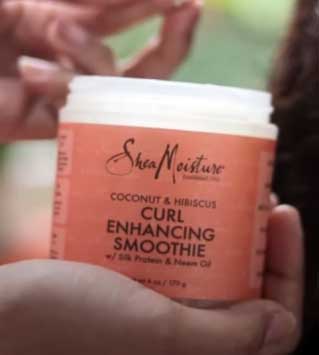
I found that the Shea Moisture Smoothie is a classic, but it can be a bit too heavy and lead to faster build-up on certain hair types.
You should realize that tgin Butter Cream has a more refined texture that absorbs better into the hair shaft rather than just sitting on top.
I noticed that the frizz control with tgin is much more consistent across different weather conditions. I believe that tgin offers a better balance of moisture and “movement” for thick curls.
I realized that while both are great, tgin feels like a more “grown-up,” sophisticated version of the traditional curl cream.
Frequently Asked Questions (FAQs)
Apply it to damp or dry hair in sections, starting from the roots and smoothing it down to the ends; it can be used daily or as a setting cream for twist-outs and braids.
tgin is specifically formulated for natural hair, excelling with Type 3 and Type 4 hair (kinky, curly, and coily textures) that requires high levels of moisture.
The tgin Butter Cream is widely considered one of the best for 4C hair because its heavy butter base effectively seals the tight coils of 4C strands to prevent rapid dryness.
Yes, but it should be used sparingly; because it is a thick cream, using too much on locs can lead to build-up inside the loc, so a light application on the surface is recommended.
Final Thoughts
You should buy the tgin Butter Cream Daily Moisturizer if you want to finally experience what it feels like to have natural hair that stays soft from wash day to wash day.
I have found that this product has completely changed the way I view my 4C texture, turning a difficult maintenance routine into a pampering session.
You should realize that your hair deserves the maximum hydration provided by real Shea butter and Vitamin E.
I am confident that your curls will look shinier, feel softer, and grow longer once you provide them with this level of nourishment.