
When you are looking for the ultimate way to protect your family from contaminated tap water, the choice often boils down to two heavy hitters: Rorra and Berkey.
I have spent months analyzing these two systems to help you decide which one truly deserves a spot on your kitchen counter.
My goal is to give you a clear, honest look at how they perform in real-world conditions so you can make an informed purchase.
You should buy the system that aligns with your lifestyle, whether that is high-tech convenience or off-grid reliability.
Rorra Vs. Berkey: Comparison Overview
| Feature | Rorra Water System | Berkey Water Filter |
| Filtration Technology | 4-Stage Reverse Osmosis | Gravity-Fed Carbon Blocks |
| Power Requirement | Electricity Required | None (Gravity-Fed) |
| Installation | Countertop (Zero Plumbing) | Countertop (Zero Plumbing) |
| Contaminant Removal | 99% of TDS, Lead, Fluoride | 99% of Pathogens, Heavy Metals |
| Filtration Speed | Fast (Pump Driven) | Slow (Drip Process) |
| Maintenance | Twist-and-Click Filters | Manual Scrubbing Required |
| Portability | Limited (Requires Outlet) | High (Ideal for Camping) |
My journey with clean water filtration
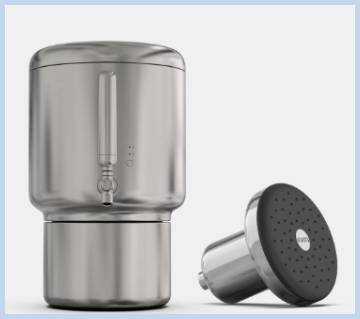
I remember the day I realized my standard pitcher filter just wasn’t cutting it.
I had noticed a strange chalky residue on the bottom of my tea kettle, and the water in my city started smelling faintly of bleach during the summer months.
I wanted something better, but I was overwhelmed by the options.
I first started with the Berkey because it seemed like the “gold standard” for survivalists and health enthusiasts alike.
Setting it up was quite an experience; I spent an hour in the kitchen trying to “prime” the black filters under my faucet, making sure the water was flowing through the pores properly.
It felt like a science experiment, and while I loved the look of the stainless steel, the slow drip meant I was often waiting for water if I forgot to refill it the night before.
Then, I decided to test out the Rorra system.
The experience was night and day.
Instead of a slow drip, Rorra uses an internal pump to push water through a reverse osmosis membrane.
I plugged it in, filled the tank, and within minutes, I had a full carafe of pure water.
The taste was noticeably “crisper” than the Berkey water, likely because reverse osmosis is much more effective at stripping out dissolved solids that carbon blocks might miss.
I also didn’t have to worry about whether I had primed the filters correctly; the machine simply told me when it was working.
What really struck me was how each system changed my kitchen habits.
With the Berkey, I felt like I was managing a living thing—I had to scrub the filters every few weeks to keep the flow rate up.
With Rorra, it felt like using a modern appliance, similar to a high-end coffee maker.
Both have their merits, but after using them side-by-side, I realized that the “best” filter really depends on whether you value high-tech precision or rugged, non-electric simplicity.
Maintenance tips for your water system
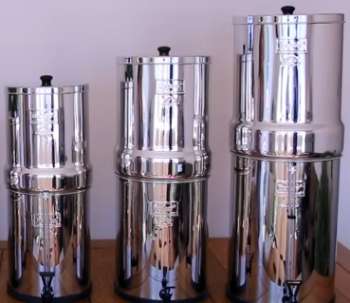
Regardless of which one you buy, you have to treat them right to keep the water tasting great:
- Sanitize the tanks: Every few weeks, you should wash the storage tanks with mild soap. Pure water lacks chlorine, so it can actually grow bacteria if the tank is left in the sun.
- Scrub your Berkey: If the drip slows down, don’t just wait longer. Take the filters out and give them a light scrub with a Scotch-Brite pad to open up the pores again.
- Flush the Rorra: If you go on vacation, run a full tank through the system when you get back to ensure the water isn’t stagnant in the internal lines.
- Check for leaks: Always inspect the washers and seals. On a Berkey, the spigot is a common leak point that just needs a quick tightening.
- Dump the waste: In the Rorra system, don’t let the waste water sit too long; empty the “brine” tank frequently to protect the RO membrane.
- Use the red dye test: For Berkey owners, do this test once a year to make sure your filters haven’t developed a bypass or a crack.
Pros and Cons of the Rorra Water System
Pros of the Rorra Water System
- Unmatched Purity: Because it uses reverse osmosis technology, it removes a wider spectrum of dissolved solids, including nitrates and arsenic, that many gravity filters leave behind.
- Speed and Convenience: You don’t have to wait hours for a gallon of water; the motorized pump ensures you have a fresh glass in seconds.
- Modern Interface: The digital display takes the guesswork out of maintenance by showing you exactly when to change the filters and what your water quality looks like in real-time.
- Compact Design: Rorra is built for the modern kitchen, fitting easily under most standard cabinets without looking like a piece of industrial equipment.
- No Priming Necessary: You simply click the filters into place and you are ready to go, which is a massive relief for anyone who hates complicated setups.
- Twist-and-Lock Maintenance: Replacing the filters is a clean, dry process that takes less than thirty seconds.
Cons of the Rorra Water System
- Requires Electricity: If the power goes out, your water filtration stops, which might be a dealbreaker for those in areas with frequent outages.
- Waste Water Ratio: Like all reverse osmosis systems, Rorra produces a small amount of “reject” water that contains the concentrated contaminants.
- Higher Upfront Cost: The technology inside is more complex, which is reflected in a higher initial price tag compared to basic gravity bins.
- Component Noise: You will hear a slight humming sound while the pump is active, which might bother you if you prefer a completely silent kitchen.
- Plastic Components: While it uses high-quality BPA-free materials, those who are strictly anti-plastic might prefer the all-metal build of a Berkey.
- Filter Cost: The high-tech filters are more expensive to replace than simple carbon elements, though they offer a higher level of safety.
Pros and Cons of the Berkey Water Filter
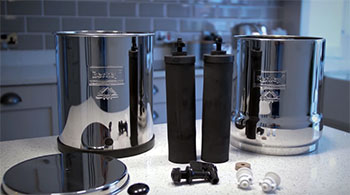
Pros of the Berkey Water Filter
- No Power Needed: This is the ultimate survival tool. It works entirely by gravity, making it the perfect choice for off-grid living or emergency preparedness.
- Stainless Steel Construction: The housing is incredibly durable and can last a lifetime with proper care, avoiding the “disposable” feel of many modern appliances.
- High Capacity: You can buy Berkey units that hold several gallons at once, making them ideal for large families or groups.
- Versatile Filtration: The Black Berkey elements are designed to remove a huge range of pathogens and bacteria without the need for chemicals.1
- Long-Term Value: If you take care of the filters and scrub them regularly, they can last for thousands of gallons before needing a replacement.
- Silent Operation: Since there are no pumps or motors, the system works in total silence, which is quite peaceful.
Cons of the Berkey Water Filter
- Slow Filtration Rate: It can take several hours to filter a full tank, which requires you to be very diligent about refilling it.
- Complicated Priming: Getting the filters ready for the first use can be a frustrating and wet process that many users find difficult to master.
- Regular Scrubbing: To maintain the flow rate, you have to physically remove the filters and scrub them with a pad, which can lead to accidental damage.
- Tall Profile: Most Berkey units are very tall, meaning they often won’t fit under standard kitchen cabinets, forcing you to find a dedicated stand.
- Inorganic Removal: Standard Berkey filters are not as effective as reverse osmosis at removing dissolved inorganic salts and minerals unless you add extra specialized filters.
- Manual Testing: There is no light or sensor to tell you if the filter has failed; you have to perform a “red food coloring test” manually to check its integrity.
Rorra Vs. Berkey: The filtration technology explained
When you look at the mechanics of these two systems, you are looking at two very different ways to clean water.
Rorra utilizes a 4-stage process that centers around a semi-permeable membrane.
This membrane is so fine that it allows water molecules through while blocking almost everything else, including dissolved salts.
This is why Rorra water often feels “lighter” or “thinner” in your mouth; it has a very low mineral content.
Berkey, on the other hand, uses a proprietary blend of carbon and other adsorption materials.
The water slowly seeps through the thick walls of the Black Berkey elements.
This process is excellent at removing chlorine, lead, and biological contaminants like bacteria.
However, because it is a gravity-based system, it struggles with things that are dissolved in the water at a molecular level, such as fluoride.
To get fluoride out of a Berkey, you have to buy additional PF-2 filters that hang in the bottom chamber, taking up space and adding another layer of maintenance.
Rorra handles fluoride automatically in its main membrane stage, which I find much more efficient.
Also Read: My Thoughts On CuZn Water Filter
Rorra Vs. AquaTru
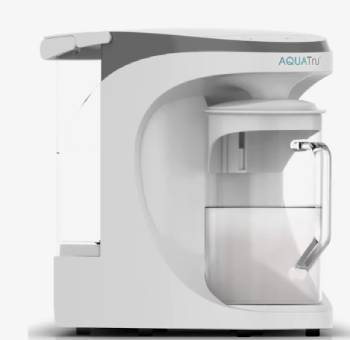
You might also see Rorra compared to AquaTru, as they both use countertop reverse osmosis.
In my analysis, Rorra tends to have a more streamlined design that feels a bit more “premium” in terms of build quality.
Rorra also focuses heavily on the user interface, making sure that even a non-technical person can understand the water quality readings.
AquaTru is a fantastic machine, but Rorra feels like it was designed for the aesthetic-conscious consumer who wants their appliances to look as good as they perform.
Frequently Asked Questions (FAQs)
For those who want the highest removal of dissolved solids and modern convenience, a reverse osmosis system like Rorra is often considered a better, more precise alternative.
It depends on your needs. Rorra is better for urban homes with electricity that want maximum purity, while Berkey is better for off-grid use and survival scenarios.
Depending on your water quality, the pre-filters usually last 6 to 12 months, while the main RO membrane can last up to 2 years.
In certain regions like California and Iowa, Berkey faced issues with state-specific lead-free certifications and EPA regulations regarding “pesticide” labeling for silver-infused filters.
Final Thoughts
At the end of the day, both Rorra and Berkey offer a massive upgrade over the toxic soup that can sometimes come out of a standard tap.
If you are a tech-savvy person who wants the absolute lowest TDS readings and a beautiful interface, you should buy the Rorra system.
However, if you are preparing for a world where the power might go out, or you just prefer the classic look of stainless steel, Berkey remains a strong contender.
I have seen the difference in my own health and energy levels since switching to high-quality filtration, and I know you will see it too.
Take the leap and invest in your hydration today; your future self will thank you for the pure, clean water.