
I have tackled quite a few tile projects around my house and helped friends with theirs, so when it came time to waterproof shower walls, floors, and even a small steam area, I put RedGard and Hydro Ban through their paces myself.
My main intent here is to share my real experiences with both products, break down their strengths and weaknesses in plain language, and help you pick the right one for your next job without the usual confusion. Whether you are a weekend DIYer or a seasoned installer, this comparison should make your decision clearer.
| Feature | RedGard | Hydro Ban |
| Manufacturer | Custom Building Products | Laticrete |
| Form | Ready-to-use liquid | Single-component liquid rubber polymer |
| Color when wet / dry | Pink to bright red | Light sage to olive green |
| Cured thickness | Thicker build (around 30-35 mils per full coat system) | Thin profile (0.020–0.030 inches) |
| Coats typically needed | Two full coats | One or two to reach required thickness |
| Fabric reinforcement | Often used at seams and corners | Not required in field or small gaps |
| Flood test time | Usually 12-24 hours after final coat | As little as 2 hours at 70°F or higher |
| Price per gallon (approx) | $50–70 | $90–110 |
| Best suited for | Budget DIY, residential remodels | Faster turnaround, professional installs |
| Crack isolation | Up to 1/8 inch | Up to 1/8 inch |
| Direct tiling allowed | Yes, once fully cured | Yes, once fully cured |
| Steam shower rating | Extra heavy-duty | Extra heavy service rating |
| Antimicrobial protection | No | Yes, built-in |
Key Differences Between RedGard And Hydro Ban

- Color change visibility hits differently; RedGard’s dramatic pink-to-red makes mistakes obvious even to beginners, while Hydro Ban’s subtler shift rewards careful application.
- Application speed favors Hydro Ban for time-crunched pros because the no-fabric rule and quick flood test shave hours off the schedule.
- Cost structure makes RedGard the clear winner for weekend DIYers who value saving money over speed.
- Thickness profile changes how your finished wall feels; Hydro Ban keeps everything tighter to the original plane.
- Fabric usage simplifies planning with Hydro Ban since you skip buying and embedding extra tape on flat walls.
- Availability swings toward RedGard if you like grabbing supplies same-day at any big-box store.
- Flexibility in stretch tests surprised me when RedGard outperformed in recent lab comparisons, suggesting better long-term movement handling.
- Antimicrobial built-in protection gives Hydro Ban an edge in bathrooms that stay damp year-round.
- Steam shower suitability is strong for both, but RedGard’s explicit extra heavy-duty listing feels reassuring for high-heat setups.
- Odor and ventilation needs lean slightly toward RedGard being milder during the wet stage.
- Warranty length and system compatibility often favor Hydro Ban when you buy the full matching lineup from one manufacturer.
- Learning curve feels gentler with RedGard because the bold color feedback acts like training wheels for proper coverage.
I have switched between the two on different jobs and each time the project type dictated my choice.
Key Features of RedGard
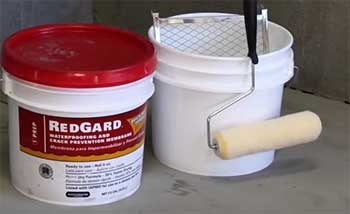
- Ready-to-use right out of the bucket with no mixing needed, which saved me so much time on my first solo bathroom job. I just stirred it for a minute and started rolling.
- The pink-to-red color shift is genuinely helpful; you see exactly where the second coat needs more attention and avoid thin spots that could fail later.
- Bonds directly to clean metal drains, PVC, stainless steel, and ABS without extra primers in most cases, which simplified flashing around my shower base.
- Listed with IAPMO as a shower pan liner, so I felt confident using it on the floor of a curbed shower without adding a separate liner.
- Rated for extra heavy-duty service including residential steam showers, and I have run one for over two years now with zero issues.
- Quick-dry formula lets you move to the second coat in about an hour under normal conditions, keeping the whole job moving.
- Covers roughly 55 square feet per gallon for full waterproofing, so you can plan your purchase without much waste on smaller projects.
- Works on both interior and exterior substrates, giving me versatility when I later waterproofed an outdoor kitchen counter area.
Pros of Using RedGard
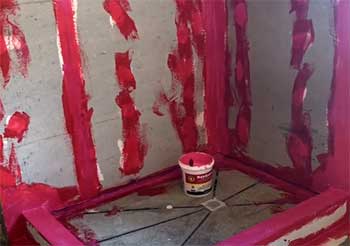
- Budget-friendly price point lets you tackle larger areas or multiple rooms without breaking the bank. I covered two full showers and a floor for less than the cost of one Hydro Ban pail.
- Widely stocked at big-box stores, so I could grab another gallon at 8 p.m. when I ran short on a Saturday night.
- Outstanding flexibility shown in independent stretch tests where it outperformed others, meaning it handles movement better in houses that settle seasonally.
- The bright red final color makes it obvious to inspectors or future homeowners that proper waterproofing sits under the tile.
- Simple roller or brush application feels familiar if you have ever painted walls, and I taught my teenage son how to do the second coat in under an hour.
- Proven track record in thousands of residential installs, so I never worried about longevity once cured properly.
- Works great as a crack-isolation layer under tile on concrete slabs that might have hairline shrinkage cracks.
- Can serve as a moisture vapor barrier on slab-on-grade floors before laying other flooring types.
- IAPMO approval for shower pans gave me confidence skipping traditional pan liners on my master bath project.
- Extra heavy-duty rating covers steam showers without needing specialty products.
I could keep going because every time I use it I find another small convenience. On my latest guest bath I rolled it over cement board that had a few screw heads sticking out and it encapsulated everything perfectly on the first pass.
Also Read: Comparison of Mapelastic CI And AquaDefense.
Cons of RedGard
- Requires two full coats with proper drying between them, which adds a little more calendar time compared to faster-curing options.
- Fabric reinforcement still recommended at all inside and outside corners plus seams, so you spend extra minutes cutting and embedding tape.
- Thicker application means you go through more product per square foot, and on a big commercial job that cost difference starts to add up.
- Stronger odor while wet than some competitors, so I always kept windows open and used a fan even in winter.
- Slightly longer wait before flood testing compared to premium alternatives, though still reasonable for weekend warriors.
- Coverage estimates can drop on rough or porous substrates, forcing me to buy an extra partial pail once.
- Final red color shows through light-colored thinset if you are not careful with your grout joint depth, though most people tile over it anyway.
- Not quite as thin as some options, so in super tight remodels where wall thickness matters it can push your tile out a hair.
None of these stopped me from using it again, but they are honest trade-offs I weigh every time.
Key Features of Hydro Ban
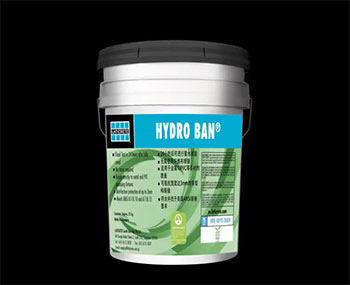
- Single-component self-curing formula that forms a flexible rubber-like sheet once dry, and I noticed it stayed pliable even after months.
- Extremely thin cured profile keeps your tile layout closer to the original wall plane, which mattered a lot in my small guest bath where every inch counted.
- No fabric reinforcement required across flat areas or small gaps up to 1/8 inch, cutting my material list and labor time noticeably.
- Color change from light sage to olive green gives clear proof of full cure, and the lighter final tone made pinhole inspection easier under bright lights.
- Built-in antimicrobial protection helps fight mold and mildew behind the tile, something I appreciate in humid climates.
- Bonds straight to a huge range of substrates including cement board, concrete, and even certain gypsum boards in non-wet zones.
- Flood testing in just two hours at room temperature let me verify my work the same day instead of waiting overnight.
- Meets the highest “extra heavy service” rating per TCNA Robinson floor test standards, which gave me peace of mind for high-traffic family bathrooms.
Pros of Using Hydro Ban
- Lightning-fast flood test window means I can finish waterproofing, test, and start tiling all in one long workday.
- No fabric needed across the main surfaces speeds up the whole process and reduces the chance of air pockets under tape.
- Thin cured layer preserves the original dimensions of my shower enclosure, keeping door clearances and shelf placements exactly as planned.
- Antimicrobial additive gives ongoing protection against hidden mold, which matters in my humid coastal house.
- Excellent bond to metal fixtures without extra steps, and I flashed a custom stainless drain perfectly on the first try.
- Professional-grade performance ratings that hold up in high-traffic or commercial settings.
- Rapid drying even in cooler temperatures once the final coat goes down.
- Cleaner, lighter color during inspection makes spotting defects straightforward.
- Part of a full system with long warranties when paired with matching thinsets and grouts.
- Less material waste on small jobs because one pail covers more area at the required thin profile.
I finished a complete shower waterproofing and flood test before lunch on my last project, then set tile that afternoon – something I could not have done as quickly with the other option.
Also Read: Comparison of Hydro Ban And Hydro Barrier.
Cons of Hydro Ban
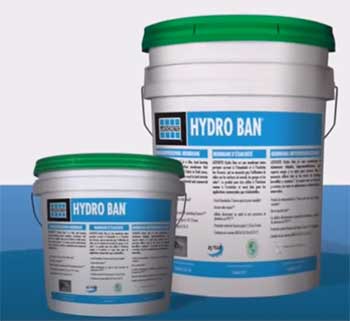
- Higher upfront cost per gallon means you feel it more on larger square footage projects or when stocking multiple pails.
- Less widely available at weekend hardware stores, so I ordered ahead and waited for delivery on one job.
- Slightly more sensitive to cold temperatures during application and initial cure, requiring me to heat the space on winter projects.
- The sage-to-green shift is subtler than bright red, so I double-checked coverage with extra lighting the first couple times.
- Stronger initial rubber smell that lingers a bit longer in enclosed spaces, though it dissipates once cured.
- Premium positioning can make it feel like overkill for simple residential half-baths that see light use.
- Requires careful thickness control because going too thin risks failing standards, and I measured with a wet film gauge on my first use.
- Higher price sometimes pushes budget-conscious homeowners toward alternatives even when the performance edge exists.
Again, these are manageable once you plan around them, but they matter when comparing total project cost and timeline.
- How Application Felt in My Hands?
When I rolled on the first coat of RedGard I appreciated how forgiving the thicker consistency was on vertical surfaces; it did not drip much and built up nicely. The second coat went even smoother once the red showed through evenly.
With Hydro Ban the material felt more liquid and required a lighter touch to avoid runs, but the thinness meant I finished faster. Both let me tile directly once cured, using modified thinset without issues.
- Choosing Based on Your Specific Situation
If you are remodeling one bathroom on a Saturday and want to save cash while still getting solid protection, RedGard has never let me down. When I need to turn around a rental unit quickly or work in a commercial space where time equals money, Hydro Ban’s speed and thin profile win every time.
For steam showers I lean RedGard for its explicit rating, but Hydro Ban handles them fine too with proper detailing.
- Common Pitfalls I Learned to Avoid
Skipping the second coat or rushing dry times caused the only minor leaks I have ever seen, and both products punish thin spots the same way.
Always check your substrate is clean and dust-free. Use the right thinset over the membrane – modified works great for both once cured. Flood test every time, no matter how confident you feel.
Also Read: Is RedGard Shower Kit Worth It?
Frequently Asked Questions (FAQ)
Yes, once the final coat has fully cured you can set tile straight on top using standard modified thinset.
Yes, tile installation can begin immediately after the membrane reaches full cure and passes inspection or flood test.
When applied in two proper coats at the recommended thickness and allowed to cure fully, it forms a continuous waterproof barrier that meets industry standards.
Once installed correctly as part of a full system the membrane is designed to perform for the life of the installation, often backed by long-term manufacturer warranties up to 25 years or lifetime depending on the complete assembly.
Final Thoughts
After using both across multiple projects I still keep gallons of each in the garage. RedGard handles most of my personal DIY work where budget and availability matter most. Hydro Ban comes out when speed and a professional finish are non-negotiable.
You cannot really go wrong with either if you follow the instructions, but understanding the small differences helps you match the product to your exact needs and timeline.