
Finding a smooth, hair-free solution for the face and body often feels like a never-ending cycle of expensive salon visits or painful at-home experiments.
I have spent a significant amount of time analyzing various hair removal gadgets to see which ones actually deliver on their promises of long-term smoothness.
In this article, I am providing an analytical Pluxy Epil Pro 3.0 review to show you why you might want to skip this purchase despite the viral marketing claims.
You deserve a hair removal tool that respects your skin barrier and your budget, and unfortunately, the Pluxy falls short in several critical areas.
My Personal Experience with the Pluxy Epil Pro 3.0
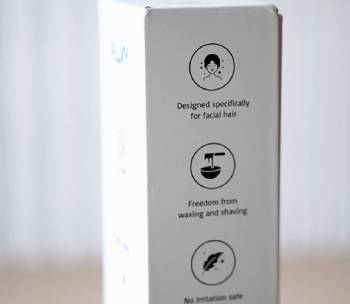
When I first ordered the Pluxy Epil Pro 3.0, I was genuinely hopeful that I had found a portable, efficient way to manage facial peach fuzz and stubborn chin hairs.
I am a regular user of various grooming tools, so I expected a device marketed as “advanced technology” to have a certain level of build quality.
The first thing I noticed when I unboxed the unit was how lightweight and plastic-heavy it felt, which immediately made me question its durability for long-term use.
I popped in the required dry battery—which was not included—and noticed that the motor sound was quite loud and somewhat shaky for such a small device.
I followed the instructions to “shave like a feather,” attempting to remove some fine hairs along my jawline, but the experience was far from the “gentle” process promised.
Instead of a clean pull from the root, I felt the 17mm disc tugging and snapping several hairs at the surface, which is exactly what you want to avoid with an epilator.
I noticed significant redness on my skin within minutes of use, despite having prepped my face as suggested in the manual.
The claim that it can remove hairs as short as 0.5mm felt like an exaggeration in my case, as I had to pass over the same area multiple times to see any results.
I also found the ergonomic handle to be a bit too small for a secure grip, making it difficult to maneuver around the curves of the underarms or knees.
After using it for a week, I noticed that the hairs I did manage to remove were already growing back as stubble, suggesting they were broken rather than pulled from the root.
I found the IPX5 waterproof rating to be the only somewhat reliable feature, as I could rinse the head, but the overall performance remained underwhelming.
When you consider the battery-operated design and the lack of a rechargeable internal power source, the device feels very outdated for a “2025/2026” model.
I also encountered issues with the head attachment becoming loose after just three cleaning cycles, which speaks to poor manufacturing standards.
It is frustrating to invest in a product that performs worse than a simple pair of tweezers or a standard safety razor.
Overall, my journey with the Pluxy was a lesson in not letting slick social media advertisements overshadow practical mechanical reality.
Maintenance Tips for Your Hair Removal Devices
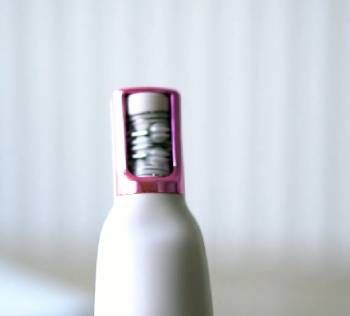
To ensure any epilator stays hygienic and functional, you must follow a strict maintenance routine that prevents bacteria buildup and mechanical failure.
I have found that the most important maintenance tip is to sanitize the epilator head with a 70% isopropyl alcohol solution after every single use.
You should use a small, stiff brush to remove every single hair fragment from between the tweezers, as these can jam the 17mm disc over time.
I suggest checking the battery compartment of the Pluxy frequently for any signs of corrosion, especially since the unit is often stored in a damp bathroom.
I noticed that the motor’s performance drops significantly as the battery weakens, so you should replace the dry battery as soon as the sound changes.
Proper maintenance also involves prepping your skin; always exfoliate 24 hours before epilating to lift any flat hairs and prevent ingrowns.
I found that applying a soothing, fragrance-free aloe vera gel after your session can help calm the redness caused by the Pluxy’s aggressive tugging.
Never share your epilator with anyone else, as this is a high-risk way to transfer skin infections or bacteria between users.
I also recommend storing the device in a dry, ventilated area rather than leaving it on the edge of the sink where moisture can seep in.
If you notice the discs becoming dull or failing to grip, do not attempt to sharpen them; it is usually a sign that the mechanical alignment is gone.
Taking care of your grooming tools is an analytical way to protect your skin’s health and ensure you get the most out of your purchase.
By keeping the head clean and the batteries fresh, you can at least minimize some of the performance issues inherent in the Pluxy design.
You are in control of your skincare hygiene, so don’t skip the cleaning steps even if you are in a rush after your morning routine.
Maintenance is the difference between a tool that lasts a few months and one that breaks after a few uses.
Follow these steps, and you will ensure that your skin remains as healthy as possible despite the drawbacks of the device.
Pros and Cons: An Analytical Breakdown
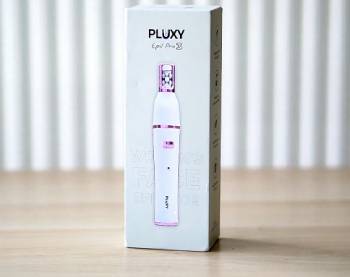
Analyzing a hair removal tool requires looking past the “salon-like” claims to see the actual impact on your skin and your daily routine.
I have detailed the following strengths and weaknesses based on the 2W motor performance and the 17mm disc design.
Pros
- Compact Portability: The small size and lightweight 150g frame make it easy to toss into a travel bag for quick touch-ups on the go.
- Waterproof Cutter Head: The IPX5 rating allows for easy rinsing of the blades under a tap, which helps maintain basic hygiene levels.
- Simple Operation: It features a basic one-button interface that requires no technical knowledge to start using immediately.
- Accessible Price: It is often marketed at a lower price point than major brands, making it an entry-level option for those curious about epilation.
- Versatile Areas: The small head size allows it to fit into tighter spots like the upper lip or between the eyebrows.
- No Cords: Being battery-operated means you aren’t restricted by the length of a charging cable or the location of an outlet.
- Initial Smoothness: When it does manage to grip a hair correctly, it provides a temporarily smooth surface that lasts longer than shaving.
Cons
- Low Motor Power: The 2W motor is significantly underpowered for thick hair, leading to painful tugging and frequent stalling: colon.
- High Hair Breakage: Instead of pulling from the root, the discs often snap the hair at the surface, causing stubble and ingrowns: colon.
- Cheap Material Build: The ABS plastic feels brittle and the internal components rattle, suggesting a very short lifespan for the device: colon.
- Skin Irritation: The lack of a pulsating or massaging feature leads to significant redness and discomfort on sensitive facial skin: colon.
- Battery Inefficiency: Using dry batteries instead of a rechargeable lithium-ion system is both expensive and environmentally unfriendly over time: colon.
- Small Tweezer Surface: The 17mm disc is too small for larger areas like legs, making a full-body session take an exhausting amount of time: colon.
- Misleading Marketing: The results rarely match the “salon-like” claims, often requiring multiple passes that leave the skin raw and inflamed: colon.
Also Read: My Thoughts On Joy Razor
Pluxy Epil Pro 3.0 Vs. Other Brands
- Pluxy Epil Pro 3.0 Vs. Braun Silk-épil 9 Flex
When I compare the Pluxy to the Braun Silk-épil 9 Flex, the difference in engineering is staggering.
Braun utilizes a fully flexible head that follows every contour of the body, whereas the Pluxy is a rigid, straight stick that struggles with curves.
I noticed that Braun’s Micro-Grip tweezer technology actually catches hair from the root, providing the promised four weeks of smoothness that Pluxy fails to deliver.
While Braun is significantly more expensive, it is a rechargeable, high-torque machine built to last for years rather than weeks.
For a professional-grade experience, the Braun remains the gold standard while Pluxy feels like a disposable toy.
- Pluxy Epil Pro 3.0 Vs. Philips Epilator Series 8000
The Philips Series 8000 features ceramic discs that are designed to grip even the finest hairs without slipping.
I found that the Philips motor provides a much more consistent speed, which reduces the “tugging” sensation that I experienced so frequently with the Pluxy.
I noticed that Philips includes a wide variety of attachments for sensitive areas that actually fit securely and perform specific functions.
The Pluxy’s “multiple function heads” feel cheaply made and often rattle during operation, making the process feel unsafe.
Choosing Philips ensures a level of skin safety and mechanical reliability that the Pluxy simply cannot match in any analytical comparison.
- Pluxy Epil Pro 3.0 Vs. Panasonic ES-EL9A-S
Panasonic offers a double-disc system that ensures if the first disc misses a hair, the second one catches it immediately.
I found this much more efficient than the single 17mm disc on the Pluxy, which required me to pass over the same spot five or six times.
I noticed that the Panasonic model is designed for both wet and dry use with high-quality materials that don’t degrade in the shower.
The Pluxy’s battery compartment felt flimsy and prone to water ingress, even with its supposed waterproof rating.
Panasonic provides a robust, multi-year warranty, which is a stark contrast to the difficult customer service reported by Pluxy users.
- Pluxy Epil Pro 3.0 Vs. Remington Smooth & Silky
Remington is a well-known budget-friendly option, but even their entry-level models feel more substantial than the Pluxy.
I found that the Remington tweezers are better aligned, leading to fewer broken hairs and less overall skin irritation during the session.
I noticed that Remington uses a curved head design that makes it much easier to navigate the underarms and bikini line compared to the Pluxy’s flat top.
While both are affordable, Remington has a long history in the grooming industry that translates to better quality control.
The Pluxy feels like a generic white-label product that has been marked up through aggressive marketing without any real hardware improvements.
- Pluxy Epil Pro 3.0 Vs. Finishing Touch Flawless
The Finishing Touch Flawless is a direct competitor in the “portable facial hair removal” space, often using a rotary shaver head.
I found that the Flawless is much gentler on the face because it doesn’t attempt to epilate, which avoids the redness I saw with Pluxy.
I noticed that the build quality of the Flawless, while also plastic, feels more cohesive and the blades stay sharp for a longer period.
The Pluxy tries to do too much by offering epilation in a small, underpowered frame, resulting in a painful and ineffective experience.
For quick facial touch-ups, the Flawless is a much more comfortable and reliable daily companion than the aggressive Pluxy device.
Also Read: My Thoughts On Dusk Razor
Frequently Asked Questions (FAQs)
Dermatologists often recommend high-quality epilators for those who want longer-lasting results, but they caution against using them on highly sensitive or inflamed skin.
Based on the 2W motor and plastic build, many users find the device begins to lose power or break down mechanically within 3 to 6 months of regular use.
Analytically, the Braun Silk-épil 9 or the Philips Series 8000 are considered the best due to their superior motor power and skin-guard features.
The main drawbacks include initial pain, the potential for ingrown hairs, skin redness, and the time required to complete a session compared to shaving.
Final Thoughts
Choosing the right hair removal method is a balance between convenience, comfort, and the long-term health of your skin’s moisture barrier.
I believe that while the Pluxy Epil Pro 3.0 offers a portable and affordable entry point, it lacks the mechanical integrity needed for a truly “gentle” experience.
If you want a device that actually removes hair from the root without snapping or causing excessive irritation, you should probably avoid buying the Pluxy.
You deserve a high-quality tool that provides consistent results and doesn’t leave you frustrated with broken parts and stubbly skin.