
Deciding between Kangen and Tyent is the ultimate showdown in the alkaline water world, and I have spent enough time with both to know that the right choice depends entirely on your priorities.
I have tested their filtration, pH ranges, and real-world durability to help you navigate through the marketing noise and find the best fit for your kitchen.
This comparison highlights the analytical differences between Enagic’s traditional craftsmanship and Tyent’s modern technology.
By the end of this article, you will be able to choose the ionizer that truly aligns with your hydration goals.
Comparison Table: Kangen (Enagic) Vs. Tyent Water Ionizers
| Feature | Kangen (Enagic K8) | Tyent (ACE-13 Turbo) |
| Number of Plates | 8 Solid Plates | 13 Solid/Mesh Hybrid Plates |
| Power Supply | Linear Transformer | SMPS Plus® (55+ Settings) |
| Filtration | Single Filter (Carbon/Lead) | Dual .01 Micron Ultra-Filtration |
| pH Range | 2.5 to 11.5 | 1.7 to 12.5 |
| Antioxidant (ORP) | Up to -700 mV | Up to -1150 mV |
| Warranty | 5-Year Limited | Lifetime (Bumper-to-Bumper) |
| Trial Period | Minimal / Restricted | 75 Days |
| Business Model | Multi-Level Marketing (MLM) | Direct Consumer Sales |
My Firsthand Experience with Kangen and Tyent
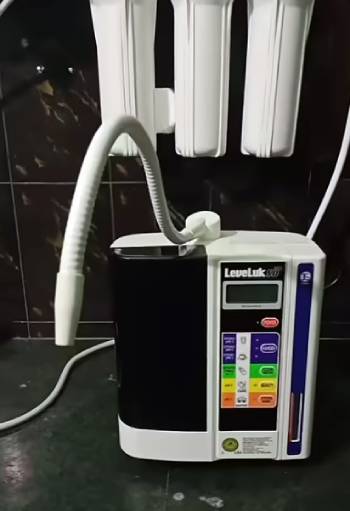
I remember the first time I set up a Kangen machine in my kitchen; I am someone who values a solid, mechanical feel, and the Enagic K8 definitely delivers on that “tank-like” build quality.
I started by drinking the 9.5 pH water for a month, and I noticed right away that the water has a very light, almost “sweet” finish that made it incredibly easy to stay hydrated.
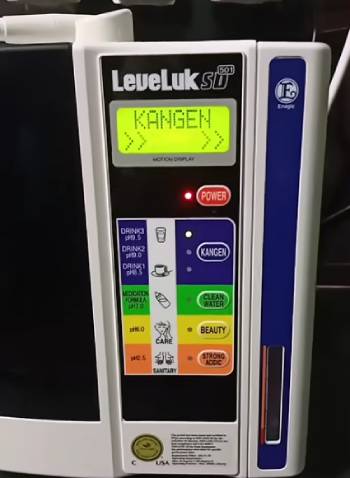
I found that the voice navigation was helpful initially, but over time, I realized that the technology felt a bit like stepping back into the early 2000s compared to my other smart appliances.
I eventually decided to install a Tyent ACE-13 to see if the modern hype was real, and this is where I saw a massive analytical shift in performance.
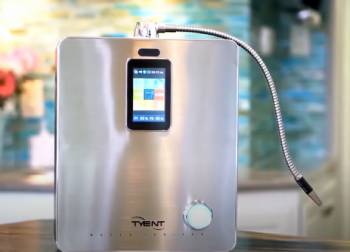
I noticed that the Tyent’s smartphone-style touchscreen was light-years ahead in terms of user interface; it felt like using an iPhone vs. a blackberry.
I am a person who lives in an area with unpredictable water quality, so I found the Tyent’s dual filtration system provided much more peace of mind than the single filter on the Kangen.
I realized that while the Kangen water tasted great, the Tyent water felt “smoother” during high-intensity workouts, which I attribute to the higher molecular hydrogen output.
I have now compared the maintenance routines of both, and I realized that the Kangen requires a bit more “hands-on” attention with its manual cleaning cartridges.
I found that the Tyent’s automated cleaning cycle was much more “set it and forget it,” which I appreciate as someone with a busy schedule.
I noticed that the Tyent produced strong acidic water for cleaning without needing the “electrolysis enhancer” chemical that Kangen uses.
I finished my comparative trial realizing that Kangen is built on tradition and a powerful community, while Tyent is built for the modern consumer who wants the highest possible specs.
Maintenance Tips for Your Water Ionizer
- Perform a Citric Acid Clean Every Month: You should realize that calcium buildup is the #1 killer of water ionizers, regardless of the brand. Using the cleaning cartridges or the automated “E-Cleaning” cycle is the best maintenance tip for plate health, which I found keeps the ORP levels high and prevents the flow from slowing down.
- Change Your Filters on Schedule: You should notice that a saturated filter can actually start “dumping” contaminants back into your water. Setting a reminder on your phone for every six months is the best maintenance tip for purity, which results in water that always tastes fresh and protects the internal electrolysis chamber from sediment.
- Use a Pre-Filter for Hard Water Areas: You should realize that if your tap water is “liquid rock,” no internal cleaning system can keep up forever. Installing a simple sediment or ion-exchange pre-filter is the best maintenance tip for longevity, which I found extends the life of the machine’s internal components by 50% or more.
- Wipe Down the Exterior with a Damp Cloth Only: You should realize that harsh kitchen chemicals can damage the plastic housing or the touchscreen display. Using just water and a microfiber cloth is the best maintenance tip for aesthetics, which provides a brand-new look for your machine even after years of daily use at the sink.
- Run the Acidic Water Setting Daily: You should notice that running the low pH setting for thirty seconds helps “flush” the plates in reverse. Making this part of your morning routine is the best maintenance tip for efficiency, which I found significantly reduces the amount of deep cleaning required throughout the year.
- Keep the Dispensing Spout Clear of Mineral Crusting: You should realize that minerals can harden at the very tip of the flexible hose. Gently soaking the tip of the hose in a small cup of vinegar once a month is the best maintenance tip for flow quality, which results in a smooth, splash-free stream of water every time you fill a glass.
Pros and Cons of Kangen (Enagic) Water Ionizers
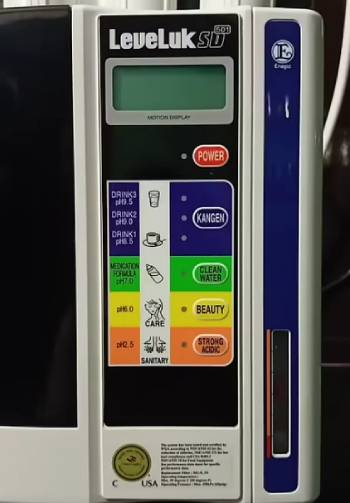
Pros of Kangen (Enagic) Water Ionizers
- Time-Tested Solid Plate Durability: Enagic uses thick, solid medical-grade titanium plates dipped in platinum: I found these plates are incredibly resistant to warping over time: this results in a machine that can easily last 15 to 20 years with proper care: I noticed the surface area is substantial enough for consistent ionization.
- Global Support Network and Community: Because of the MLM model, there are distributors in almost every country: I found that getting a local “demo” or finding a neighbor with a machine is very easy: this provides a social aspect to hydration that other brands lack: I noticed the Enagic community is incredibly passionate and helpful for beginners.
- Large Electrolysis Chamber: The K8 model features eight large plates: I found this allows for a very high flow rate when filling up large water jugs for the family: this results in less waiting time at the sink: I noticed it maintains its pH levels quite well even when the water is running at full speed.
- Simple, Mechanical Reliability: There aren’t many “smart” parts that can glitch out: I found the physical buttons and straightforward interface were very reliable: this provides a “no-nonsense” experience for users who don’t want to deal with software updates or touchscreens: I noticed it feels more like a heavy-duty tool than a delicate gadget.
- Industry-Standard 2.5 pH and 11.5 pH Water: It is famous for producing “strong” waters for sanitizing and cleaning: I found the 2.5 pH water was excellent for disinfecting my cutting boards: this results in a chemical-free home cleaning routine: I noticed the 11.5 pH water is legendary for pulling oils and pesticides off store-bought produce.
Cons of Kangen (Enagic): The analytical drawbacks:
- Inflated Price Tag Due to Commissions: because the machine’s cost includes several layers of distributor payouts: I found that a significant portion of the $5,000 price doesn’t go toward the hardware: this results in a lower “spec-per-dollar” ratio compared to direct-sale brands: I noticed that similar technology is often available elsewhere for half the price.
- Outdated Single-Filter System: because it relies on one internal filter that mainly targets chlorine and sediment: I found that it doesn’t effectively remove modern toxins like PFAS, lead, or pharmaceuticals: this results in the need for a separate, expensive pre-filtration system: I noticed the filter life is also shorter than many competitors.
- Requirement for Chemical Enhancers: because the machine needs a “booster” (sodium hypochlorite) to reach the extreme pH levels of 2.5 and 11.5: I found it a bit unsettling to have a chemical bottle inside a health machine: this results in an ongoing cost for the enhancer fluid: I noticed the machine requires more frequent deep cleaning when these chemicals are used.
- Restricted and Short Warranty: because Enagic only offers a 5-year limited warranty with many stipulations: I found that if the machine fails in year six, you are looking at a very expensive repair bill: this results in a higher “lifetime cost of ownership”: I noticed that many “gray market” or used machines have no warranty coverage at all.
- Transformer-Based Power Supply: because it uses older transformer technology rather than modern SMPS: I found the machine can get quite warm during heavy use: this results in less precise control over the electrical current: I noticed that power fluctuations in your home can affect the consistency of the ionized water.
Pros and Cons of Tyent Water Ionizers
Pros of Tyent Water Ionizers
- Advanced 13-Plate Hybrid Technology: The ACE-13 uses more plates than almost any other home ionizer: I found this allows it to reach much higher antioxidant (ORP) levels: this results in “super-charged” water that feels very refreshing: I noticed the hybrid solid/mesh design maximizes surface area without sacrificing strength.
- Superior Dual Ultra-Filtration: It comes standard with two large internal filters: I found these were capable of removing over 200 contaminants, including lead and fluoride: this provides a level of purity that the Kangen single filter can’t match: I noticed the water tasted cleaner and more “neutral” right out of the box.
- Industry-Leading Lifetime Warranty: Tyent offers a “bumper-to-bumper” warranty on parts and labor: I found this gives me much more confidence in the long-term investment: this results in zero repair costs for as long as you own the machine: I noticed there are no hidden “fine print” clauses that exclude the most expensive parts.
- Modern Smartphone-Style Interface: The touchscreen is bright, responsive, and easy to navigate: I found it much more intuitive to select different pH levels for drinking, cooking, or cleaning: this provides a premium, high-tech feel in the kitchen: I noticed the voice alerts are clear and can be adjusted for volume.
- Higher Hydrogen and ORP Output: Because of the higher power and more plates: I found the Tyent could reach -1150 mV ORP: this results in more molecular hydrogen, which is what many scientists believe provides the actual health benefits: I noticed the water stayed “active” for longer when stored in a vacuum-sealed bottle.
Cons of Tyent: The analytical drawbacks:
- More Complex Internal Electronics: because it is a “smart” appliance with many sensors and a computer board: I found that it could potentially be more susceptible to software glitches than a mechanical Kangen: this results in a reliance on the company’s tech support: I noticed that a surge protector is an absolute must for this machine.
- Direct Sales Model Lacks Local Community: because you buy it online or over the phone: I found it harder to find a “local group” of users to swap stories with: this results in a more solitary user experience: I noticed you have to rely on their centralized customer service rather than a neighbor down the street.
- The Machine Can Be Bulkier: because it houses 13 plates and dual large filters: I found the ACE-13 takes up a fair amount of counter real estate: this results in a crowded feel in smaller kitchens: I noticed the under-sink version (UCE-11) is a better choice if you have limited counter space.
- Touchscreen Can Be Sensitive to Wet Hands: because it uses capacitive sensors like a phone: I found that if my fingers were dripping wet, I sometimes had to wipe them before it would register a touch: this results in a minor annoyance during food prep: I noticed it’s a small trade-off for having such a beautiful display.
- Initial “New Machine” Taste: because of the high-intensity filtration and new plates: I found the water had a slight “mineral” taste for the first 20 gallons: this results in a need to run the machine for a while before the flavor fully settles: I noticed it disappeared quickly, but it was surprising during the first few glasses.
Comparison with Others
- Tyent Vs. Life Ionizers
I found that Life Ionizers offers a wider range of plate options, sometimes going up to 15 plates in their top-tier models.
I noticed that Tyent’s “Turbo” settings and SMPS power supply feel a bit more refined and consistent during heavy use.
You should realize that Life Ionizers often requires more “customization” upfront, which I found a bit confusing for a first-time buyer.
I found that Tyent’s lifetime warranty is generally easier to claim and more comprehensive than the tiered warranties offered by Life.
- Kangen Vs. AquaTru
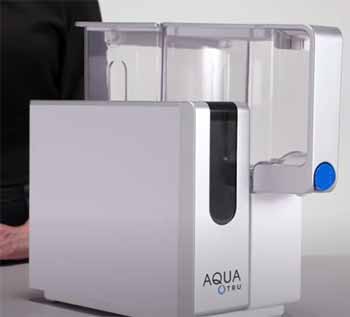
I noticed that AquaTru is a reverse osmosis system, which I found is fundamentally different from the ionization of a Kangen machine.
I found that AquaTru removes far more contaminants, but it also removes the healthy minerals that the Kangen machine relies on for electrolysis.
You should realize that Kangen water has a higher pH and antioxidant potential, whereas AquaTru water is just “pure.”
I found that if you want the “healing” properties of alkaline water, the Kangen is the better analytical choice, but if you want the safest water, go with AquaTru.
- Tyent Vs. Bawell Platinum
I found that Bawell is a great budget alternative for those who don’t want to spend $3,000 to $5,000 on a high-end machine.
I noticed that the Tyent ACE-13 has much higher-quality plates and a much more advanced filtration system than the Bawell Platinum.
You should realize that the Bawell feels a bit more “plastic-heavy” and lacks the high-end touchscreen interface.
I found that for a long-term investment that you plan to keep for twenty years, the Tyent’s build quality and warranty make it worth the extra money.
Also Read: My Thoughts On Kangen Water Machine
Frequently Asked Questions (FAQs)
Analytically, Tyent outperforms Kangen in most technical categories, including the number of plates, filtration quality, warranty length, and antioxidant potential, although Kangen has a stronger global community.
Tom Brady has famously promoted the “TB12 Method,” which emphasizes heavy hydration with electrolyte-rich and alkaline water, and he has been associated with using Kangen (Enagic) machines in various media reports over the years.
The main disadvantages include the high price due to MLM commissions, the outdated single-filter system, the need for chemical enhancers to reach high/low pH, and a shorter 5-year warranty.
You might choose not to buy one if you prioritize modern filtration (like dual .01 micron filters), a lifetime warranty, or if you prefer a direct-to-consumer business model over a multi-level marketing structure.
Final Thoughts
You should buy the Kangen K8 if you value the “Gold Standard” reputation of Enagic and want to be part of a global community that offers local support and a proven track record of durability.
I have found that the Kangen machine still produces some of the most consistent “strong” waters for cleaning, which makes it a versatile tool for an eco-friendly household.
However, you should buy the Tyent ACE-13 if you want the highest possible filtration standards and the peace of mind that comes with a lifetime warranty and modern touchscreen technology.
I believe the Tyent is the analytical winner for the modern health enthusiast who wants the most “active” hydrogen-rich water without paying for a middleman’s commission.
Your journey to better hydration starts with the machine that fits your lifestyle, not just the marketing.