
You should buy the Flume water monitor if you want a non-invasive, high-tech way to keep a bird’s-eye view on your home’s water consumption without ever having to call a plumber or cut into your pipes.
I have found that for most of you, this smart device is the ultimate insurance policy against astronomical utility bills and the silent, structural damage caused by hidden leaks.
In this review, I will explain why Flume 2 is the most accessible water monitoring system on the market and how it can help you save a precious resource while protecting your wallet.
My Personal Experience with the Flume Water Monitor
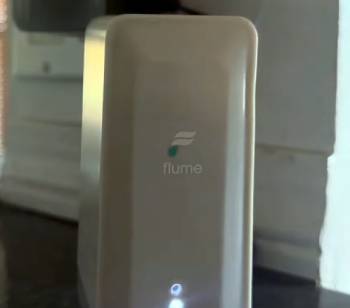
I remember the day I decided to finally tackle my rising water bills; I suspected a leak but couldn’t find a single damp spot in my house.
I am a person who loves DIY but hates dealing with pressurized plumbing, so when I saw that the Flume 2 simply straps onto the water meter, I was sold instantly.
I found that the installation was genuinely as simple as they claimed; I spent about ten minutes in my utility closet and out by the street meter, and suddenly, my phone was transformed into a live dashboard of my home’s hydration.
I realized, however, that the true power of Flume isn’t just seeing the total gallons; it is the granularity.
I am someone who likes to know exactly where my money is going, and I noticed that the app could actually distinguish between my dishwasher running and my backyard irrigation kicking on at 4 am.
I found it incredibly satisfying to watch the “gallons per minute” drop to zero when everything was off, giving me the first real peace of mind I’ve had in years regarding my plumbing.
I eventually had a “hero moment” with the device while I was traveling.
I was hundreds of miles away when I received a notification about an unusual flow.
I noticed that a guest bathroom toilet had a flapper valve that had decided to stick open.
I found that I could call a neighbor to go in and jiggle the handle, saving what would have been hundreds of gallons of wasted water over the weekend.
I finished that month looking at a water bill that was nearly 15% lower than the previous one, and I realized that the device had practically paid for itself in one go.
I noticed that even when my curious raccoons messed with an outdoor faucet, Flume caught the spike immediately, proving it’s as much a security device as it is a conservation tool.
Maintenance Tips for Your Flume 2 Sensor
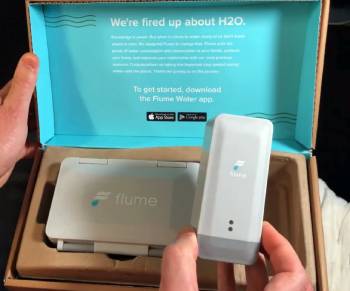
- Check the Elastic Straps for Dry Rot Yearly: You should realize that being in a damp meter box can eventually wear down the rubber straps holding the sensor in place. Replacing the straps every few years is the best maintenance tip for security, which I found ensures the sensor doesn’t slip and lose its alignment with the meter’s magnetic field.
- Keep the Wi-Fi Bridge Away from Large Metal Objects: You should notice that appliances or metal shelving can interfere with the radio frequency coming from the street. Placing the bridge near a window is the best maintenance tip for connectivity, which results in a more stable “always-on” connection for your real-time data.
- Clean the Face of the Water Meter Monthly: You should realize that dirt, mud, or spider webs can build up between the sensor and the meter glass. Wiping the meter face with a dry cloth is the best maintenance tip for accuracy, which I found prevents any interference with the magnetic readings that the smart chip relies on.
- Monitor Battery Health Within the App Regularly: You should notice that cold winters can drain the lithium batteries faster than usual. Checking the battery percentage in the settings menu is the best maintenance tip for reliability, which provides you with enough lead time to order a replacement before the leak detection goes dark.
- Recalibrate the Meter Accuracy Check Seasonally: You should realize that water pressure changes or utility meter updates can slightly throw off the readings. Performing the “bucket test” via the app is the best maintenance tip for precision, which results in your Flume data matching your actual utility bill as closely as possible.
- Update the Flume App Whenever a New Version Drops: You should notice that the developers frequently push out new “signatures” for appliances like modern high-efficiency washers. Keeping your software current is the best maintenance tip for insights, which I found allows the AI to better categorize your indoor vs. outdoor water usage.
Pros and Cons of the Flume 2 Water Monitor

Pros of the Flume 2 Water Monitor
- Non-Invasive Strap-On Installation: It features a smart magnetic sensor that reads your meter’s spinning disc from the outside: I found that you don’t need to cut any pipes or shut off your main water supply during setup: this results in a zero-risk installation that any homeowner can handle: I noticed it took me less time to install than it does to brew a pot of coffee.
- Hyper-Accurate Real-Time Monitoring: It utilizes patented magnetic field technology to detect water usage down to one-hundredth of a gallon: I found that it catches even the smallest drips that traditional meters might miss: this provides an analytical look at your daily habits, from shower length to toilet flushes: I noticed the app updates almost instantly as you turn a faucet on.
- Intelligent Leak Detection and Alerts: It features a smart algorithm that learns your home’s “normal” water signature over time: I found that if a pipe bursts or a faucet is left running, you get a push notification on your smartphone: this results in preventing catastrophic water damage before it can ruin your floors or drywall: I noticed the alerts are customizable so you don’t get “notification fatigue.”
- Detailed Indoor vs. Outdoor Categorization: It utilizes machine learning to estimate which fixtures are using water at any given time: I found that I could see exactly how much my lawn was costing me compared to my laundry: this provides a clear roadmap for where you can cut back to save money: I noticed that seeing the “gallons per minute” for my sprinklers was a huge wake-up call.
- Wide Compatibility with Utility Rebates: It is often eligible for significant discounts or full reimbursements through local water districts: I found that many users, like those with LADWP, can get the device for as little as $24: this results in an incredibly low barrier to entry for smart home tech: I noticed that checking for a rebate first can save you over $100.
Cons of Flume Water Monitor: The analytical drawbacks:
- Lack of Automatic Water Shut-Off: because the device sits on the outside of the pipe rather than being integrated into the plumbing line: I found that while it can tell you there is a flood, it cannot physically stop the water for you: this results in a need for you to be nearby or have a neighbor with a key when an alert sounds: I noticed that this is the main trade-off for the easy DIY installation.
- Dependency on a Bridge and Wi-Fi Signal: because the sensor on the meter has to communicate wirelessly with a bridge plugged into an indoor outlet: I found that if your water meter is too far from the house or buried under heavy metal lids, the signal can drop: this provides a challenge for larger properties or rural setups: I noticed that finding the perfect “line of sight” for the bridge took a bit of trial and error.
- Battery Replacement Requirements: because the outdoor sensor is a standalone unit powered by a proprietary battery pack: I found that you have to eventually replace the batteries every year or two depending on usage: this results in an ongoing maintenance task that requires you to open the meter box: I noticed that while the app warns you, it’s still one more thing to keep track of in your smart home.
- Subscription-Based Premium Features: because certain advanced data analytics and detailed fixture breakdowns are locked behind a “Flume Insight” paywall: I found that the basic free version is great, but the best insights require a monthly fee: this results in a recurring cost that some users might find annoying after buying the hardware: I noticed that you have to weigh whether the extra data is actually going to save you more than the subscription costs.
- Compatibility Issues with Non-Magnetic Meters: because the technology relies on reading the magnetic pulse of the meter’s internal disc: I found that it simply won’t work with older mechanical meters that don’t have a magnetic signature or certain digital-only models: this provides a frustration for users who buy the device only to find their utility company uses incompatible hardware: I noticed that sending a photo of your meter to their support team before buying is a must.
Comparison with Others
- Flume 2 Vs. Moen Flo Smart Water Shutoff
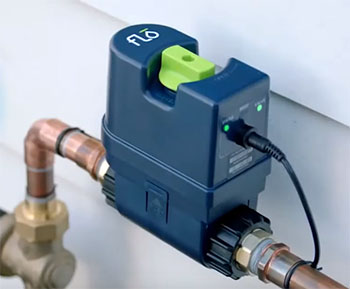
I found that the Moen Flo is a much more aggressive protection system because it actually cuts into your main line and can turn the water off automatically.
You should realize that the Moen Flo requires a professional plumber and usually costs significantly more in both hardware and labor.
I noticed that the Flume 2 is much more user-friendly for renters or DIY enthusiasts who aren’t allowed to modify their plumbing.
I believe that the Flume 2 is the better analytical choice for monitoring and conservation, while the Moen Flo is for those who want total “flood prevention” at any cost.
- Flume 2 Vs. Phyn Plus Smart Water Assistant
I noticed that Phyn Plus uses pressure wave sensing technology to detect leaks, which I found to be incredibly high-tech but also very expensive.
You should realize that Phyn, like the Moen Flo, requires an indoor installation on the main pipe, making it less versatile than the Flume’s meter-top sensor.
I found that Flume’s ability to track outdoor irrigation is often more accurate because it reads the actual utility meter rather than sensing vibrations in the pipe.
I believe that the Flume 2 offers a much better “data-per-dollar” ratio for the average homeowner who wants to track every gallon used.
- Flume 2 Vs. StreamLabs Smart Water Monitor
I found that the StreamLabs monitor is another non-invasive option, but I noticed it attaches to the pipe inside the house using ultrasonic tech.
You should realize that StreamLabs can sometimes miss outdoor usage if it’s installed after the point where the main line splits for the yard.
I noticed that Flume 2 avoids this issue entirely by sitting directly on the utility meter where all water enters the property.
I believe that the Flume 2 provides a more comprehensive “whole-home” picture because it captures every single drop that passes the city’s meter.
- Flume 2 Vs. Govee Water Leak Detectors
I noticed that Govee sensors are “puddle sensors” that you place on the floor, whereas I found the Flume is a “flow monitor” for the whole system.
You should realize that Govee won’t tell you if a pipe is leaking inside a wall or if a toilet is running; it only alerts you when a floor is already wet.
I found that using Flume 2 allows you to catch the problem hours or days before a puddle ever forms on the ground.
I believe that Flume 2 is the proactive solution, while Govee is a reactive backup for high-risk areas like under a water heater.
- Flume 2 Vs. Eve Water Guard
I found that the Eve Water Guard is specifically designed for Apple HomeKit users and uses a sensing cable to detect moisture.
You should realize that Eve is a “spot” detector, much like the Govee, and lacks the ability to provide detailed water usage charts or budgets.
I noticed that Flume 2’s app is much more robust for someone looking to actually change their water consumption habits.
I believe that the Flume 2 is a superior management tool, whereas the Eve is simply a specialized alarm for a specific smart home ecosystem.
Also Read: Comparison Of FloLogic Vs. Flo by Moen Smart Home Water Monitoring
Frequently Asked Questions (FAQs)
The Flume 2 is exceptionally accurate, with independent lab tests showing it can match utility meter readings with over 99% precision, detecting even minute flows.
The “best” system depends on your needs; Flume 2 is the best DIY and non-invasive system, while Moen Flo is often considered the best for automatic emergency shut-off.
Flume offers a robust free tier for leak alerts and basic monitoring, but advanced “Insight” features like detailed fixture breakdowns and enhanced data history require a monthly subscription.
The Flume 2X is essentially the same sensor as the Flume 2 but features an upgraded battery pack that allows for much longer intervals between replacements and better range.
Final Thoughts
You should buy the Flume water monitor if you want the most convenient, accurate, and analytical way to stop wasting water and start saving money on your utility bills.
I have found that the ease of a ten-minute installation coupled with the power of real-time leak alerts makes this a mandatory addition to any modern smart home.
However, you must ensure your water meter is compatible before ordering to avoid any technical headaches.
I believe that once you see your water usage in real-time, you will never look at your plumbing the same way again.