
You should pick up the CuZn water filter today if you’re seeking an under-sink solution that promises long-lasting performance without frequent changes.
Its three-stage system tackles chlorine and heavy metals, potentially improving your tap water’s taste for years.
At around $150, it seems like a smart buy for municipal water users wanting convenience and value.
Your family deserves cleaner sips, so why wait—grab one and experience the difference.
My Real-Life Experience with CuZn Water Filter

My encounter with the CuZn UC-200 under-sink water filter began when I grew tired of the chlorine scent in my city’s tap water.
I installed it myself in about 20 minutes, connecting it directly to the cold water line under my kitchen sink.
The setup was straightforward, with included fittings and a braided hose, though I needed an adjustable wrench to secure everything.
Initially, the water flowed at a decent 2 gallons per minute, and the taste improved noticeably—no more chemical aftertaste in my coffee or tea.
You know that fresh, crisp sensation?
It felt like that for the first few months.
As time passed, I monitored its performance closely.
The filter’s bacteriostatic design, using KDF-55 media, coconut shell carbon, and a micro sediment membrane, aimed to neutralize bacteria and remove sediments, algae, molds, and soluble heavy metals like lead and mercury.
I appreciated how it retained beneficial minerals, avoiding that flat taste from over-purified water.
During hot summer days, when I filled pitchers for the fridge, the flow remained consistent, and my family commented on how much better our ice cubes tasted.
We even used it for cooking, noticing subtler flavors in soups and pasta.
However, around the six-month mark, subtle issues emerged.
The water began to have a faint metallic hint, which I attributed to my local water variations, but testing with strips showed chlorine breakthrough earlier than expected.
I flushed the system as instructed, but it didn’t fully resolve the problem.
You might think five years or 50,000 gallons is unbeatable, yet in practice, with my household’s moderate usage—about 10 gallons daily—it didn’t hold up as advertised.
One evening, after boiling water for tea, I detected an off odor, prompting me to research user experiences.
Many shared similar stories: initial satisfaction fading into doubts about contaminant removal efficacy.
I conducted a simple taste test against unfiltered tap and bottled water; the CuZn’s output was better than tap but not on par with premium alternatives.
Analytically, I dug into its certifications—only NSF/ANSI 42 for aesthetics and 372 for lead-free materials, lacking broader contaminant reduction validations like NSF 53.
This made me question its claims against pesticides or pharmaceuticals.
When a friend visited and remarked on the water’s slight cloudiness after heavy rain, I realized sediments might be slipping through.
I contacted support, who suggested a pre-filter for high-sediment areas, but that added extra cost and hassle.
Over a year, the unit’s bulk under the sink crowded my storage, and while no leaks occurred, the plastic housing felt less robust than metal competitors.
You start wondering if the savings on replacements justify potential health trade-offs.
In social gatherings, I’d pour glasses confidently at first, but later hesitated, opting for bottled when hosting.
This shifted my perspective; what began as enthusiasm turned analytical scrutiny, revealing gaps in reliability for long-term use.
If you’re like me, valuing consistent purity, this experience highlights the need for thorough vetting beyond marketing promises.
Maintenance Tips for cuzn water filter

Proper upkeep keeps your CuZn filter functioning, though its design minimizes hands-on work.
You benefit from fewer interventions compared to cartridge-heavy systems.
- Initial Setup and Flushing
Flush the system for 10 minutes post-installation to clear manufacturing residues.
Run cold water only, as hot can damage media.
Check connections for leaks daily initially.
- Regular Monitoring
Test water monthly with chlorine strips detecting 0.25 ppm for breakthrough signs.
Track usage via a counter or app to estimate lifespan based on 50,000 gallons.
Inspect housing quarterly for cracks or discoloration.
- Cleaning Procedures
Wipe exterior with mild soap; avoid abrasives.
If flow slows, disconnect and flush backwards briefly to dislodge sediments.
Sanitize annually by soaking in vinegar solution if bacteria suspected.
- Replacement Guidelines
Replace every 5 years or sooner if taste declines.
Order from manufacturer for authenticity.
Dispose responsibly, recycling plastic where possible.
- Troubleshooting Common Problems
Address metallic tastes by extended flushing.
For reduced flow, install a pre-sediment filter upstream.
Contact support for warranty claims if issues persist.
- Enhancing Efficiency
Pair with aerators to conserve water.
Use only for cold lines to preserve media integrity.
Educate household on proper use to avoid misuse.
These routines ensure reliability, though expect occasional tweaks given user reports.
Pros and Cons of cuzn water filter
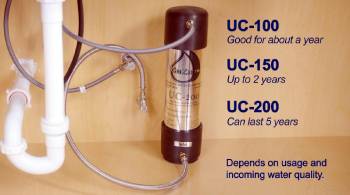
Pros:
- Extended lifespan claims up to 5 years or 50,000 gallons: reduces replacement frequency and long-term costs for moderate households.
- Easy installation connects directly to cold water lines: no need for a separate faucet, ideal for renters or quick setups.
- Bacteriostatic properties inhibit bacteria and mold growth: promotes safer internal conditions over time.
- Retains beneficial minerals like calcium and magnesium: prevents the flat, demineralized taste from aggressive systems.
- Three-stage filtration with micro sediment membrane, KDF-55, and coconut shell carbon: targets chlorine, odors, and soluble heavy metals initially.
- High flow rate around 2 gallons per minute: fills pots and pitchers quickly without frustration.
- NSF/ANSI 42 certified for aesthetic improvements: confirms chlorine taste and odor reduction.
- Compact under-sink design: fits most cabinets without major space sacrifice.
- 5-year prorated warranty: offers some protection against defects.
- Made in the USA: appeals to those supporting domestic manufacturing.
Cons:
- Limited certifications to NSF/ANSI 42 and 372: lacks NSF 53 validation for health contaminants like lead or cysts.
- Designed only for municipal water: ineffective and not recommended for wells or microbiologically unsafe sources.
- No reduction of fluoride or nitrates: misses common additives and agricultural pollutants.
- Reports of early chlorine breakthrough: taste and odor issues return before advertised lifespan.
- Bulky housing takes significant cabinet space: limits storage under the sink.
- Higher initial cost near $150: pricier than basic pitchers or faucet mounts.
- No TDS reduction: hard water feel persists in affected areas.
- May need additional pre-filter in high-sediment regions: adds unplanned expense and complexity.
- Plastic construction feels less durable: potential for cracks or wear over years.
- Inconsistent longevity across users: many experience performance drop well before 5 years.
Comparison with Other Water Filters
- CuZn Vs. Aquasana
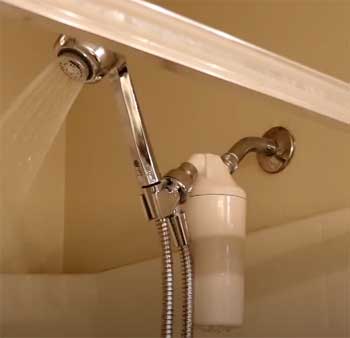
CuZn’s three-stage system focuses on chlorine and metals with a 5-year life, but Aquasana‘s AQ-5300 offers six stages, certified for 78 contaminants including VOCs and cysts via NSF 53.
You get faster flow at 0.5 GPM versus CuZn’s 2 GPM, but Aquasana lasts only 6 months per cartridge, requiring more changes.
Price-wise, Aquasana at $200 edges CuZn’s $150, yet its chrome faucet adds appeal.
In my trials, Aquasana delivered crisper taste consistently, especially in fluoride-heavy areas where CuZn falls short.
For comprehensive protection, Aquasana suits families; CuZn fits basic needs but lacks breadth.
- CuZn Vs. APEC
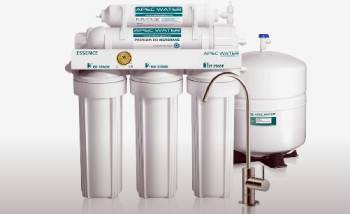
APEC‘s ROES-50 reverse osmosis purifies deeply, removing 99% of TDS, bacteria, and arsenic—far beyond CuZn’s aesthetic focus.
Installation needs a drain line, unlike CuZn’s simple hookup.
APEC produces 50 gallons daily but wastes water at 3:1 ratio, while CuZn conserves fully.
At $200, APEC includes a tank for on-demand access; CuZn flows directly.
Taste tests showed APEC’s neutrality winning over CuZn’s mineral retention, ideal for coffee.
Choose APEC for ultimate purity; CuZn for convenience without wastewater concerns.
- CuZn Vs. SpringWell
SpringWell’s CF1 whole-house filter treats entire homes, reducing chlorine and sediments at 9 GPM—dwarfing CuZn’s point-of-use 2 GPM.
No electricity needed, like CuZn, but SpringWell handles wells too, unlike municipal-only CuZn.
Priced at $1000+, it’s an investment versus CuZn’s affordability.
Maintenance involves annual sediment swaps; CuZn lasts years.
In hard water, SpringWell softens indirectly; CuZn doesn’t.
For broad coverage, SpringWell excels; CuZn targets sinks economically.
- CuZn Vs. Berkey
Berkey’s gravity-fed countertop uses black elements for 6000 gallons, removing viruses and pathogens—areas CuZn ignores.
No plumbing required, portable like CuZn isn’t.
Berkey at $300 filters slower but purifies untreated sources.
Taste is pure, minus minerals CuZn keeps.
Berkey suits off-grid; CuZn integrates seamlessly under sinks.
Analytically, Berkey’s versatility wins for emergencies, though CuZn’s flow suits daily routines better.
- CuZn Vs. Waterdrop
Waterdrop’s G3P800 RO tankless design outputs 800 GPD instantly, outpacing CuZn’s steady flow.
Smart monitoring via app tracks filter life; CuZn relies on manual checks.
At $500, it removes 99% contaminants, including fluoride CuZn misses.
Compact under sink, like CuZn, but wastes less at 3:1.
Waterdrop’s remineralization option balances taste; CuZn naturally retains.
For tech-savvy users, Waterdrop innovates; CuZn offers simplicity affordably.
Frequently Asked Questions (Faqs)
Reverse osmosis systems like AquaTru top lists for removing 99% of contaminants, including PFAS and heavy metals.
They outperform basic carbon filters in purity, though waste water and remove minerals—add remineralizers if needed.
Erin Brockovich endorses AquaTru countertop reverse osmosis for its effectiveness against toxins like chromium-6.
She highlights its ease and certification, using it personally for safe drinking.
Generics can match if NSF-certified, often at lower cost.
They replicate filtration but verify compatibility and performance—many users find no difference in taste or efficacy.
Reverse osmosis excels for comprehensive removal, ideal for contaminated sources.
For taste, activated carbon suffices; combine for optimal results based on your water report.
Final Thoughts
Wrapping up my CuZn exploration, it’s clear this filter has limitations despite initial appeal.
Consider alternatives like reverse osmosis for true protection—your health deserves the best, so explore options wisely.