
Maintaining a household often feels like a never-ending series of small battles against invisible enemies, and water quality is usually at the top of that list.
I have spent the better part of a year testing different filtration methods to see if an affordable inline system could actually replace the bulky pitchers taking up space in my fridge.
My intent is to give you an analytical, first-person Aqua Crest filter review based on real-world usage so you can stop guessing about your tap water.
You should buy the Aqua Crest under-sink filter if you want a high-capacity, low-maintenance solution that delivers crisp, lead-free water directly from your cold water line for pennies a day.
Comparison Table: Under-Sink Filtration Performance
| Feature | Aqua Crest Under-Sink System | Standard Pitcher Filter |
| Gallon Capacity | 5,000 Gallons | 40 – 120 Gallons |
| Flow Rate | 1.5 Gallons Per Minute | Drip-by-Drip (Slow) |
| Filter Life | 12 Months | 2 Months |
| Core Material | KDF & 0.5μm Coconut Carbon | Standard Granular Carbon |
| Installation | 5-Minute Direct Connect | No Installation Required |
| Space Usage | Hidden Under Cabinet | Occupies Fridge/Counter Space |
| Cost Per Day | Approximately 5 Cents | Approximately 45 Cents |
My personal experience with the Aqua Crest filter system
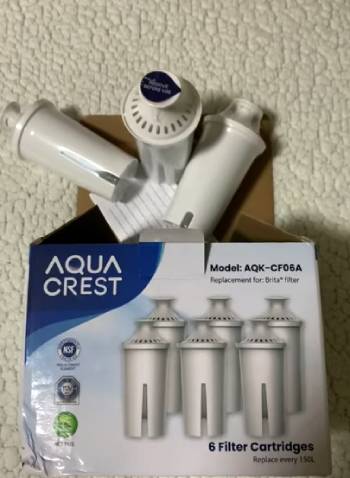
I remember the day I finally had enough of my water pitcher; it was the third time in one afternoon that I went to pour a glass of water only to find it bone-dry because someone forgot to refill it.
I decided to look into under-sink options, but as a non-plumber, the idea of drilling through my granite countertops or cutting pipes terrified me.
When I ordered the Aqua Crest inline system, I was skeptical that a $25 filter could actually handle 5,000 gallons of water while being easy to install.
The package arrived with everything clearly labeled, including the braided stainless steel hoses which felt surprisingly heavy-duty for the price point.1
The installation process was the first “aha” moment for me.
I am someone who usually ends up with a leak whenever I touch a wrench, but this system used a simple push-to-connect mechanism.
I turned off my cold water valve, unhooked the existing line to the faucet, and clicked the Aqua Crest filter right into the middle.
The only tricky part was realizing that the white sleeves on the filter need to be held down firmly if you ever want to pull the hose back out—a little detail I missed until I accidentally put the “In” hose on the “Out” side.
Once I got the orientation right, I turned the water back on and held my breath.
For the first few minutes, the water looked like grey milk due to the carbon fines, which is totally normal.
But after about five minutes of flushing, the water turned crystal clear.
The most immediate change was the smell; my city water usually has a faint swimming-pool scent of chlorine, but with the Aqua Crest, that was completely gone.
I also live in an area where well water users complain about a slight sulfur or iron taste, and while I’m on city water, my neighbors on the outskirts have told me this specific filter cleared up their “rotten egg” smell instantly.
Nine months later, the flow rate hasn’t dropped a bit, and I still have that “just-installed” freshness every time I fill my glass.
Maintenance and tips for your inline filter

Maintaining an under-sink system is relatively low-effort, but there are a few “pro-tips” I’ve picked up to ensure you don’t end up with a flooded kitchen.
- Check for leaks after 24 hours: Whenever I install a new Aqua Crest filter, I place a small paper towel directly under the connections. I check it the next morning; if the paper is bone-dry, I know the seal is perfect. If it’s even slightly damp, you likely need to reseat the push-connect needle.
- Flush the system after vacations: If you leave the house for more than three days, the water sitting inside the carbon block can become stagnant. I always run the cold water for at least 60 seconds when I get back to ensure the “old” water is flushed out and the zinc-ion/carbon media is refreshed.
- Label the “Replace By” date: Since there is no light to tell you when the filter is done, I take a permanent marker and write the installation date directly on the white plastic body of the filter.
- Use the bracket for stability: The kit comes with a mounting bracket or cable ties. I highly recommend using the bracket to screw the filter to the side of your cabinet. If the filter is just rolling around under the sink, the hoses can loosen over time as you pull items in and out.
- Mind the water temperature: This is strictly a cold-water filter. Never, ever hook it up to your hot water line. High temperatures can damage the internal membranes and cause the carbon to dump captured contaminants back into your water.
- Keep the spare tube clips: The kit comes with small blue locking clips for the push-connectors. Do not throw these away. They are essential for preventing the hose from accidentally popping out if something bangs into the filter under the sink.
Pros and Cons of the Aqua Crest Under-Sink Filter
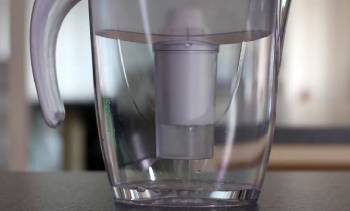
Pros of the Aqua Crest Under-Sink Filter
- Massive 5,000-Gallon Capacity: One of the biggest wins for me is the sheer volume this thing handles; you can wash vegetables, fill large pots for pasta, and hydrate the whole family for a year without worrying about “wasting” the filter life.
- High-Speed Flow Rate: Unlike many filters that reduce your faucet to a sad trickle, this system maintains a 1.5 GPM flow, meaning I can fill a standard 8-ounce cup in about three seconds.
- Comprehensive Contaminant Reduction: Tested against NSF standards, it effectively reduces 98% of chlorine and heavy metals like lead, which provides a massive peace of mind for older homes with aging pipes.
- Ultra-Compact Design: The inline nature of the filter means it takes up almost no footprint under my sink, leaving plenty of room for my cleaning supplies and trash bin.
- Tool-Free Installation: Since it uses direct-connect fittings for standard 3/8-inch valves, you don’t need to call a plumber or own a professional toolbox to get it running.
- Versatile Application: Because it uses standard fittings, I realized I could actually buy a second one for my RV and another for my dedicated ice maker line to prevent scale buildup in the machine.
Cons of the Aqua Crest Under-Sink Filter
- Plastic Housing Durability Concerns: While the hoses are stainless steel, the main body of the filter is a high-grade plastic: I have found that you need to be very careful not to cross-thread the plastic threads when first attaching the fittings, or you risk a slow drip that can damage your cabinetry over time.
- Inflexible Replacement Cycle: The 12-month lifespan is a double-edged sword: if you live in an area with extremely high sediment or “hard” water, the 0.5-micron pores can clog much faster than the 5,000-gallon rating suggests, potentially forcing you to buy a replacement every six months rather than once a year.
- Limited TDS Reduction Capabilities: It is important to note that this is not a Reverse Osmosis system: analytically speaking, it will not lower your Total Dissolved Solids (TDS) reading because it keeps beneficial minerals in the water, which might be a dealbreaker for people who want “zero-water” purity levels.
- Push-Connect Removal Struggle: As I mentioned in my experience part, the “quick-connect” fittings are actually quite stubborn to release once they have been under pressure for a few months: you often need a pair of pliers or a very strong grip to depress the white collar and release the hose during a filter swap.
- Sediment Cloudiness on Startup: Every time you change the filter, you have to be prepared to waste about five to ten gallons of water to clear out the carbon dust: if you don’t flush it long enough, you’ll end up with a gritty taste in your first few cups of coffee.
- No Integrated Filter Life Indicator: Unlike some high-end competitors that have a LED light on the faucet, this is a “silent” filter: you won’t know it’s dead until the water flow begins to slow down significantly or the chlorine taste starts creeping back in.
Aqua Crest Vs. Other Brands
- Aqua Crest Vs. Waterdrop
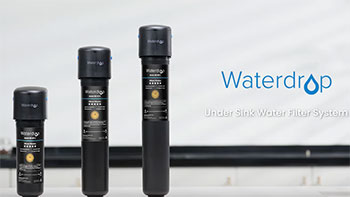
Waterdrop is the most direct competitor to Aqua Crest in the affordable under-sink market.
In the battle of Aqua Crest vs Waterdrop, both offer a similar 5,000-gallon capacity and a five-minute installation.
However, I have noticed that Aqua Crest often includes a slightly more robust “all-inclusive” packing list, including the braided hoses which Waterdrop sometimes charges extra for.
Analytically, the filtration accuracy is nearly identical at 0.5 microns, but Aqua Crest usually sits at a slightly lower price point.
You should choose Aqua Crest if you want the best “dollar-to-gallon” value, whereas Waterdrop is great if you want a slightly sleeker-looking filter body.
- Aqua Crest Vs. Frizzlife
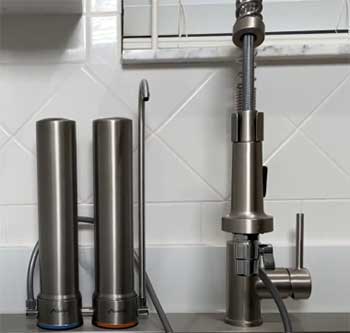
Frizzlife takes a different approach by using a “housing” system where you only replace the internal cartridge.
When comparing Aqua Crest vs Frizzlife, the Frizzlife system is more eco-friendly because you aren’t throwing away the whole plastic cylinder every year.
That said, the initial cost for Frizzlife is often double or triple the price of an Aqua Crest.
Aqua Crest is the “disposable” king—you just swap the whole unit out and you’re done.
If you are a renter or don’t want to deal with unscrewing a housing and potentially dealing with messy o-rings, Aqua Crest is much more convenient.
- Aqua Crest Vs. Brita Hub
The Brita Hub is a countertop electric filtration system that has become very popular lately.
In an Aqua Crest vs Brita Hub comparison, the biggest difference is space and speed.
The Brita Hub sits on your counter and requires an outlet, while the Aqua Crest is hidden and works off your water pressure.
Brita’s filters also only last for about 120 gallons, which is a tiny fraction of the 5,000 gallons you get with Aqua Crest.
If you have a large family or cook frequently, the Brita Hub will become an expensive chore to maintain compared to the “set it and forget it” nature of the under-sink inline filter.
- Aqua Crest Vs. Culligan
Culligan is the premium, often professionally-installed brand that many people grew up with.
Comparing Aqua Crest vs Culligan really highlights the shift in the modern DIY market.
Culligan systems often require a separate faucet to be drilled into your sink, whereas Aqua Crest connects directly to your existing faucet.7
While Culligan might offer slightly more specialized filtration for specific well-water issues, the price of their replacement filters can be staggering.
For 90% of suburban households, the Aqua Crest provides the same “taste” quality for about 20% of the long-term cost.
Frequently Asked Questions (FAQs)
AQUACREST is an independent brand that specializes in high-quality, compatible water filtration solutions, with manufacturing processes that meet international safety and performance standards.
Yes, they are made from food-grade, BPA-free, and lead-free materials and are tested against NSF/ANSI standards 42 and 372 for material safety and chlorine reduction.
Yes, the under-sink inline system is specifically designed to reduce 98% of lead and other heavy metals using a combination of KDF media and high-quality coconut shell activated carbon.
The standard under-sink inline filter is rated for 12 months or 5,000 gallons of water, whichever comes first, though this may vary depending on your local water quality and sediment levels.
Final Thoughts
Deciding to take control of your home’s water quality shouldn’t have to be an expensive or complicated endeavor.
After looking at the data and living with the system, you should buy the Aqua Crest filter if you want a reliable, high-capacity solution that eliminates the need for plastic pitchers forever.
I have found that the convenience of having filtered water instantly from the tap has changed the way my family stays hydrated and even improved the taste of our home-cooked meals.
You should buy a unit today to enjoy the peace of mind that comes with professional-grade filtration at a fraction of the traditional cost.